Change Inc · Duurzaamheid
Remake Society: A Sustainable Fashion Sector Focused on Circularity and People
Remake Society in Rotterdam is a social enterprise that repairs and upcycles clothing, providing employment for individuals from diverse backgrounds, many of whom were previously unemployed. The organization emphasizes that sustainability in fashion involves caring for both materials and people.
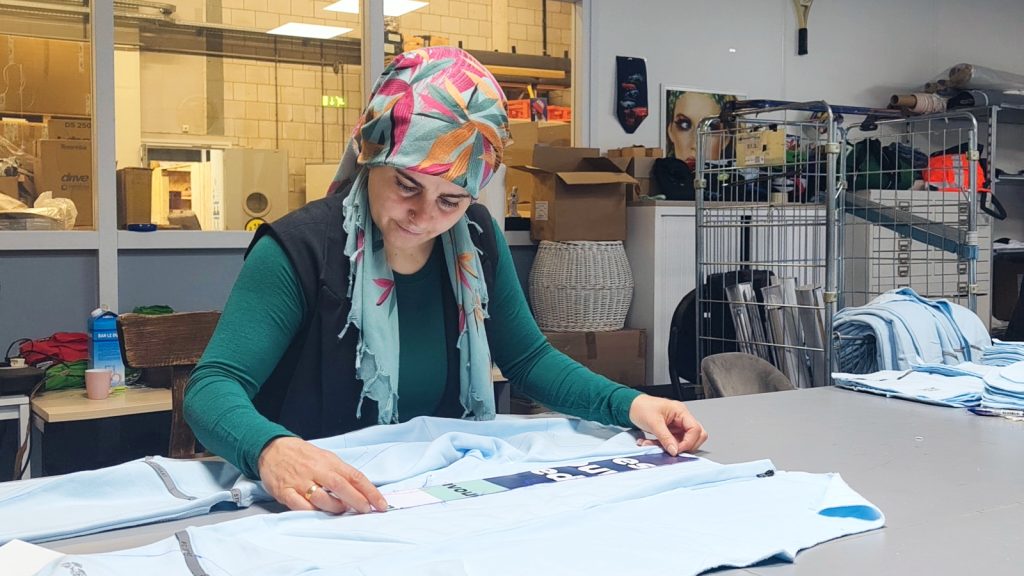
Esther Smit, director of Remake Society, showcases how old garments like men's shirts are transformed into women's blouses and long jeans into shorts. The workshop also processes fabric scraps into toiletry bags and old sails into tote bags, while emblems from a security company are being sewn onto jackets. Employees, often having learned tailoring in their home countries, are given opportunities to re-enter the workforce, representing fourteen different nationalities.
Remake Society collaborates with brands such as Jeans Centre, Garcia, Van Tilburg, and Groenendijk Bedrijfskleding. Employees typically start with a trial period on benefits, followed by contract offers and job coaching, aiming for either self-employment or permanent positions. Smit highlights the profound impact of stable employment, citing an employee who felt like a true Dutch citizen after receiving a permanent contract, enabling her to obtain a mortgage.
Smit's background in textiles, influenced by her seamstress grandmother and tailor mother, led her to found Oxious in 2014, selling hamam towels partly made from recycled textiles and produced by fairly paid women in Turkey. In 2023, this evolved into Remake Society. While initially focused on upcycling, Smit found it labor-intensive with thin margins. Consequently, Remake Society increasingly focuses on service-based work, like repairing Jeans Centre's trousers for resale and creating custom clothing for Groenendijk.
The shift towards service provision is more commercially viable, though upcycling for brand recognition continues. New European legislation prohibiting the disposal of unsold goods and returns is beneficial for Remake Society's business model, aligning with Smit's foresight from three years prior. She also notes that resource scarcity and geopolitical instability make circularity a strategic imperative.
Remake Society holds a PSO (Prestatieladder Socialer Ondernemen) quality mark, demonstrating social entrepreneurship. While CSR managers are often supportive, securing buy-in from executive leadership, who prioritize financial returns, can be challenging. The company faced difficulties in securing funding, especially after the bankruptcy of similar sustainable brands, but eventually received support from foundations like Rabo Foundation and Social Impact Fonds Rotterdam.
Achieving breakeven for the first time this year, Remake Society aims to double its revenue annually and expand its workforce from twenty to one hundred employees. Smit aspires to demonstrate that societal challenges can be solved entrepreneurially, emphasizing mutual integration where both employees and the company learn from each other, fostering a reciprocal exchange of cultures and perspectives.
AI-samenvatting op basis van de bron.
Change Inc