Hackaday · Creativity & design
WWI ADFGVX Cipher Partially Cracked by AI
An AI model, GPT-6 Astra, has reportedly cracked a previously undeciphered World War I coded message. The ADFGVX cipher, introduced in 1918, was complex for its time.
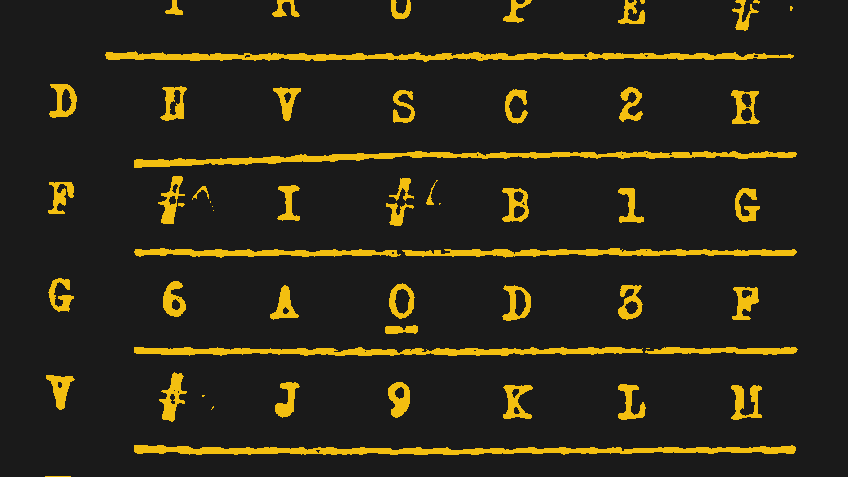
The ADFGVX cipher used a grid (initially 5x5, later 6x6) labeled with the letters A, D, F, G, V, X. Plaintext letters were replaced by their grid coordinates (e.g., AF, XG), and then these pairs were subjected to a transposition key.
While the French successfully broke the ADFGVX cipher during WWI, some messages remained unsolved. One intercepted on November 27, 1918, has now been partially decoded by the AI.
The AI's decoding suggests the message used the German key TRUPPENVERSCHIEBUNG, which was believed to have been implemented later. This implies the key was used earlier than previously thought.
The decoded message appears to be a report on British ship movements near Sevastopol, with details matching the known position of HMS Canterbury at the time.
The article notes the impressive human effort involved in breaking such codes during WWI, highlighting the work of codebreaker Georges Painvin, who reportedly became ill from the strain.
The AI's success offers a glimpse into its capabilities, demonstrating advancements in cryptanalysis.
The article also briefly mentions other encryption methods used during the war, including one by the Swiss.
AI-samenvatting op basis van de bron.
Hackaday