designboom · Creativity & design
Absence as Spectacle in Postwar Art
Postwar artists explored how withholding visible or audible elements could redirect attention, revealing subtler perceptions of light, sound, architecture, and self-awareness. This approach offers an alternative to art that relies on abundance and constant stimulation.
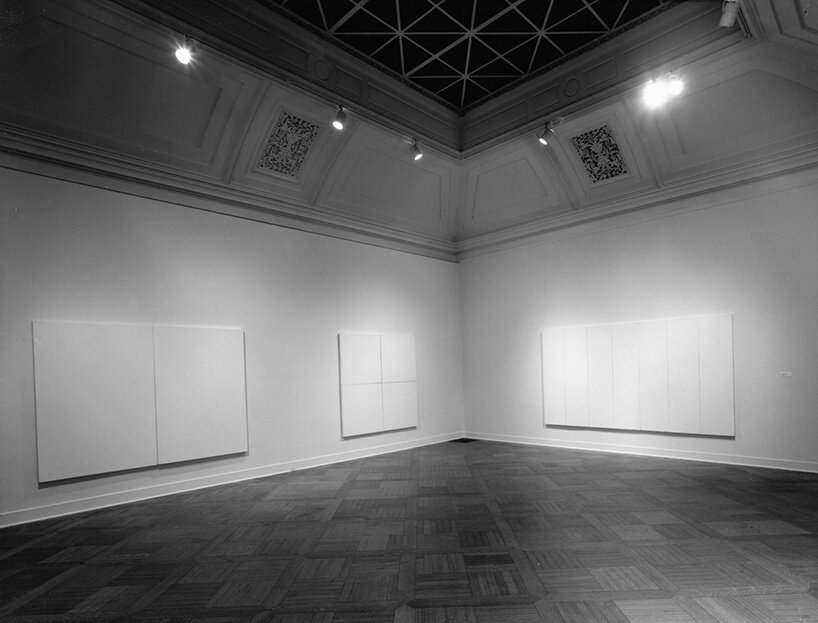
Robert Rauschenberg's White Paintings (1951) register environmental changes like light and shadow, shifting focus to incidental details. John Cage described them as 'airports for the lights, shadows, and particles.'
John Cage's 4′33″ (1952) uses ambient sounds as its composition, making everyday sounds prominent.
Yves Klein's Le Vide (1958) emptied a gallery, making the architecture and visitor expectations the focus.
Doug Wheeler's PSAD Synthetic Desert III (2017) used controlled surfaces and lighting to heighten awareness of subtle sounds and movements.
The Rothko Chapel (opened 1971) uses a quiet environment for prolonged focus on fewer visual elements.
Alvin Lucier's I Am Sitting in a Room (1969) reveals a room's resonant frequencies through repeated recordings.
These artists created a different spectacle by relinquishing control, making surrounding conditions and perception itself perceptible, offering an alternative to constant stimulation.
AI-samenvatting op basis van de bron.
designboom