ArchDaily · Creativity & design
Flexible Acoustic Control for Changing Environments
Acoustic design traditionally relies on permanent building elements, but many environments and noise sources are temporary or change over time. This necessitates adaptable sound control solutions.
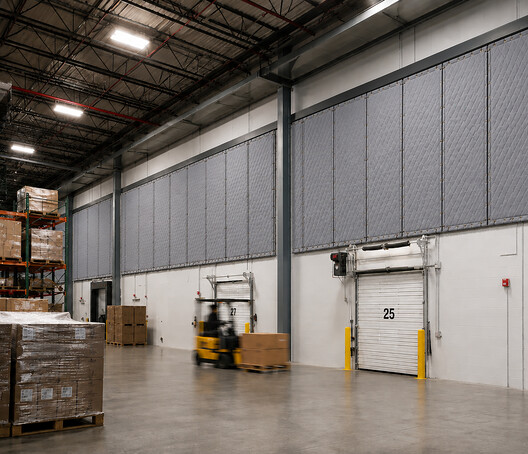
Controlling sound often involves reducing transmission or containment, which becomes challenging when noise sources, like machinery or production lines, are relocated. Reconstructing spaces for each change is impractical.
Portable acoustic solutions offer a flexible approach by bringing sound control directly to the noise source. Temporary barriers, blankets, curtains, and portable enclosures can be installed, repositioned, or removed as needed, complementing permanent strategies.
Designing for change means recognizing temporary acoustic needs. Interventions lasting weeks or factories that frequently reorganize operations can benefit from adaptable acoustic elements that do not hinder future configurations.
Acoustical Surfaces provides solutions like barriers, blankets, curtains, and enclosures to create acoustic zones or temporary separations. These elements act as lightweight infrastructure, modifying acoustic performance without permanently altering the architecture.
For example, Acoustical Surfaces' Indoor Soundproof Quilted Acoustic Curtains offer modular sound absorption and blocking with a mass-loaded vinyl core, suitable for isolating machinery or separating work areas. They are water and chemical resistant and easily reconfigurable.
Portable solutions enhance flexibility in various settings. At Open Shop Studio, quilted curtain panels with a track system allowed a room to be reconfigured. Similarly, Zamboni's office used removable acoustic curtains with a steel frame for sound blocking comparable to a permanent wall.
AI-samenvatting op basis van de bron.
ArchDaily