Dezeen · Architectuur
US Supreme Court allows White House ballroom construction to proceed
The United States Supreme Court has lifted a temporary ban on the above-ground construction of the White House ballroom extension, allowing the project to continue.
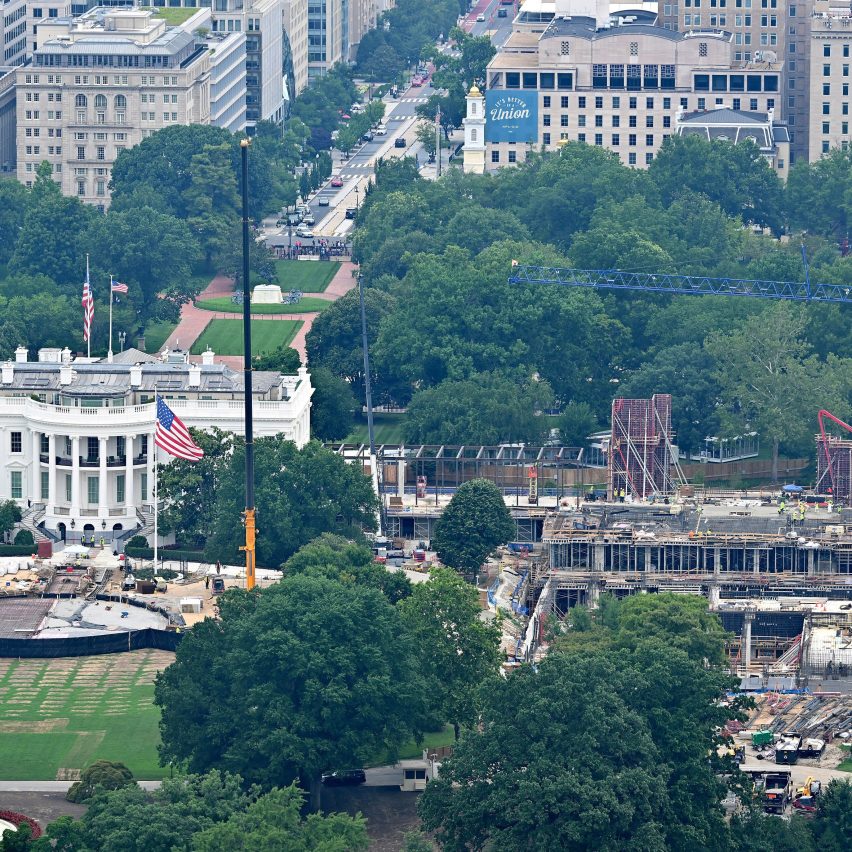
The Supreme Court overturned a lower court's injunction, which was issued in response to a lawsuit filed by preservationists, including the National Trust for Historic Preservation. The ruling suggests the government is likely to prevail in arguing that the Trust lacks standing to challenge the East Wing Modernization Project, which aims to replace the former East Wing building demolished last year.
The project, designed by Shalom Baranes Associates, has already undergone significant foundation work and visible above-ground construction. While the ruling addresses the standing of the lawsuit, not necessarily the legality of the project itself, it signals that construction will likely proceed, potentially before legal challenges are fully resolved.
Chief Justice John Roberts dissented, emphasizing the historical and symbolic importance of the White House and the need for adherence to rules in its development. Critics have noted a lack of coherence in the new structure's style and size compared to the rest of the White House.
The administration claims the project is 65% complete, with construction crews working around the clock. Former President Trump celebrated the decision, stating the ballroom is on track for a Summer 2028 completion and calling it one of the greatest buildings ever constructed in Washington, D.C.
The construction extends beyond the original East Wing footprint and includes a subterranean military complex and security checks. The administration has also considered adding a storey to the West Wing.
AI-samenvatting op basis van de bron.
Dezeen