NASA · Space
NISAR Satellite Captures Volcanic Eruption Time-lapse
The NASA-ISRO Synthetic Aperture Radar (NISAR) mission has created a time-lapse video showing the lava flow from Russia's Krasheninnikov volcano. This eruption is the first in nearly 500 years.
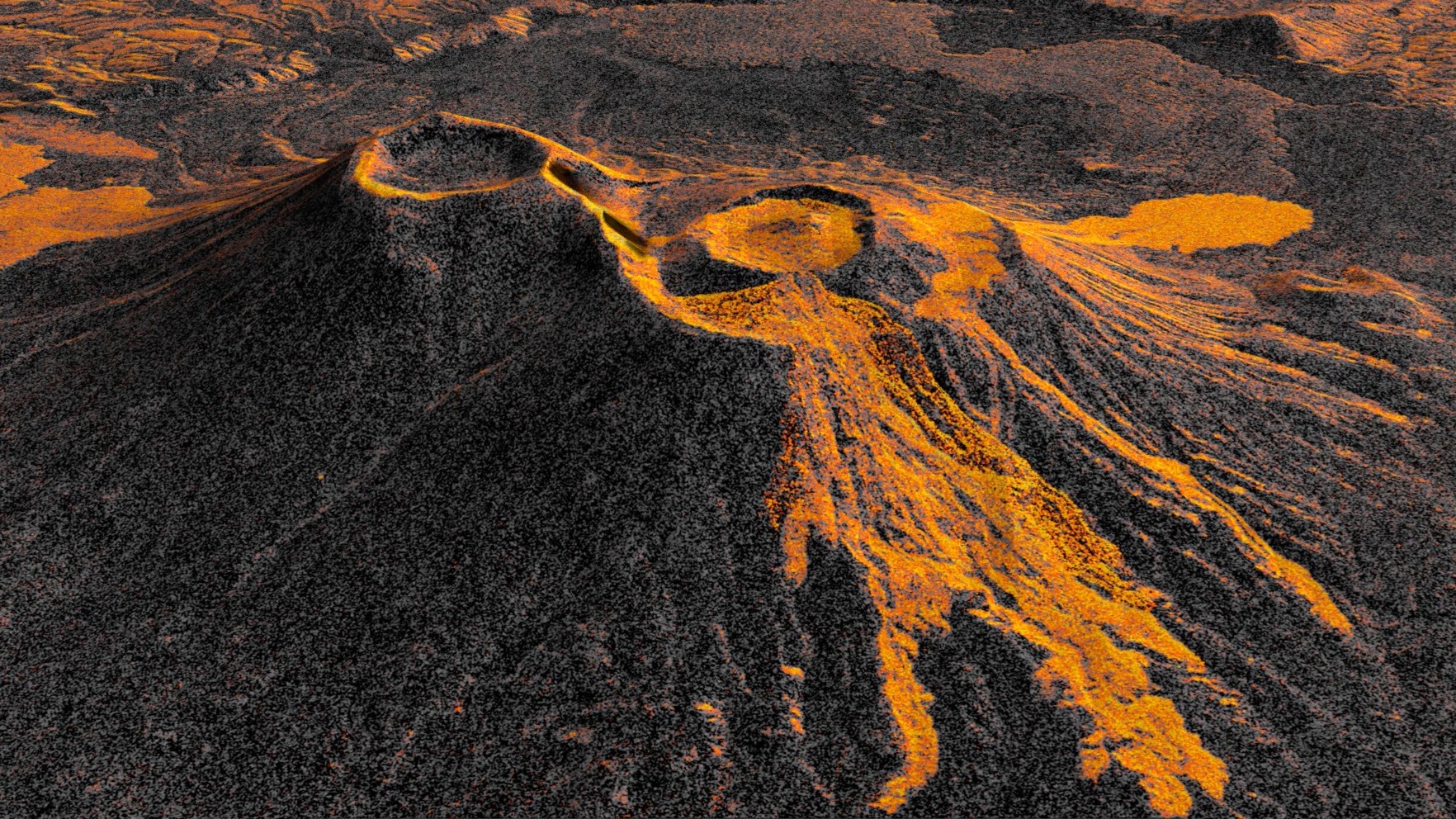
The animation sequences 17 NISAR radar images from December 2025 to mid-August 2026, showing lava spreading from the northern crater. Lava appears brighter due to microwave reflection.
NISAR, orbiting 464 miles above Earth, takes radar snapshots twice every 12 days. Its L-band radar provides near-global coverage at resolutions of dozens of feet.
The Krasheninnikov volcano pair erupted on July 30, 2025, following an earthquake. The northern volcano has been continuously releasing molten rock eastward.
The time-lapse highlights NISAR's capability to monitor hazard development for research and emergency response.
NISAR uses synthetic aperture radar (SAR) technology, processing microwave pulses to create detailed images. Each pixel represents about a 30-foot-by-30-foot area.
The mission's L-band radar can penetrate tree canopies, while its S-band radar observes them, offering complementary data.
NISAR is the first space mission with two free-flying radar instruments. JPL provided the L-band SAR, and ISRO supplied the S-band SAR.
AI-samenvatting op basis van de bron.
NASA