Dezeen · Architectuur
Device Slows Citi Bikes in Rent-Burdened New York Neighborhoods
New York artist Justin Blinder has developed a device that physically alters the experience of riding a Citi Bike in areas of the city with high housing pressure. The project, called Ground Truth, aims to make housing affordability data more tangible for the public.
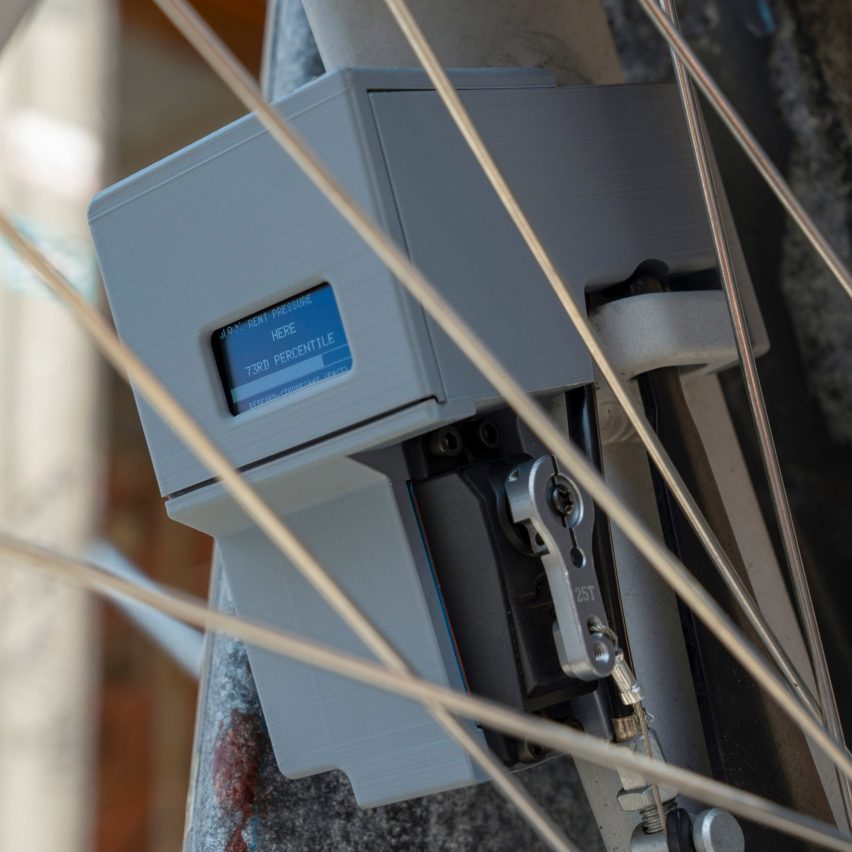
Blinder, drawing on his background in data, design, and as a former bike messenger, created a 3D-printed device that attaches to a Citi Bike's front fork. This device manipulates the bike's brakes, applying resistance in neighborhoods where rent burden—the percentage of income spent on rent and utilities—is high. Conversely, it releases tension in more affordable areas.
The project's goal is to move housing affordability data from abstract maps to a physical experience. Blinder explained that it's difficult to visually grasp the complexities of housing affordability embedded in the urban environment. He wanted to create a sensation that riders must physically navigate, making them more aware of the varying economic conditions within the city.
The device uses data primarily from the American Community Survey, combining median rent burden and the percentage of renters spending over half their income on housing. A small arm extends to apply resistance to the front brake, with the intensity varying based on local rent burden percentiles. A tiny screen displays this information, and a QR code links to the project's website.
Constructed with an ESP32S3 computer, an SD card containing the dataset, a GPS system, and a servo motor, the device is designed for easy installation. Blinder emphasized that the data is highly localized, with conditions potentially differing even between city blocks. He also noted that the placement of Citi Bike docks can reflect these urban disparities.
For safety reasons, the device is not permanently attached to public bikes. Instead, Blinder organizes group tours where volunteers can experience the Ground Truth project. He hopes to eventually make the project open-source, allowing others to build their own versions and further explore ways to bring data off screens and into physical, embodied experiences.
AI-samenvatting op basis van de bron.
Dezeen