Science News · Wetenschap
Worms Move Faster in Confined Spaces, Study Finds
Researchers have discovered that tiny worms move more quickly through narrow channels than across open spaces, a finding that could inform the design of wormlike robots for tasks like navigating rubble or moving within the human body.
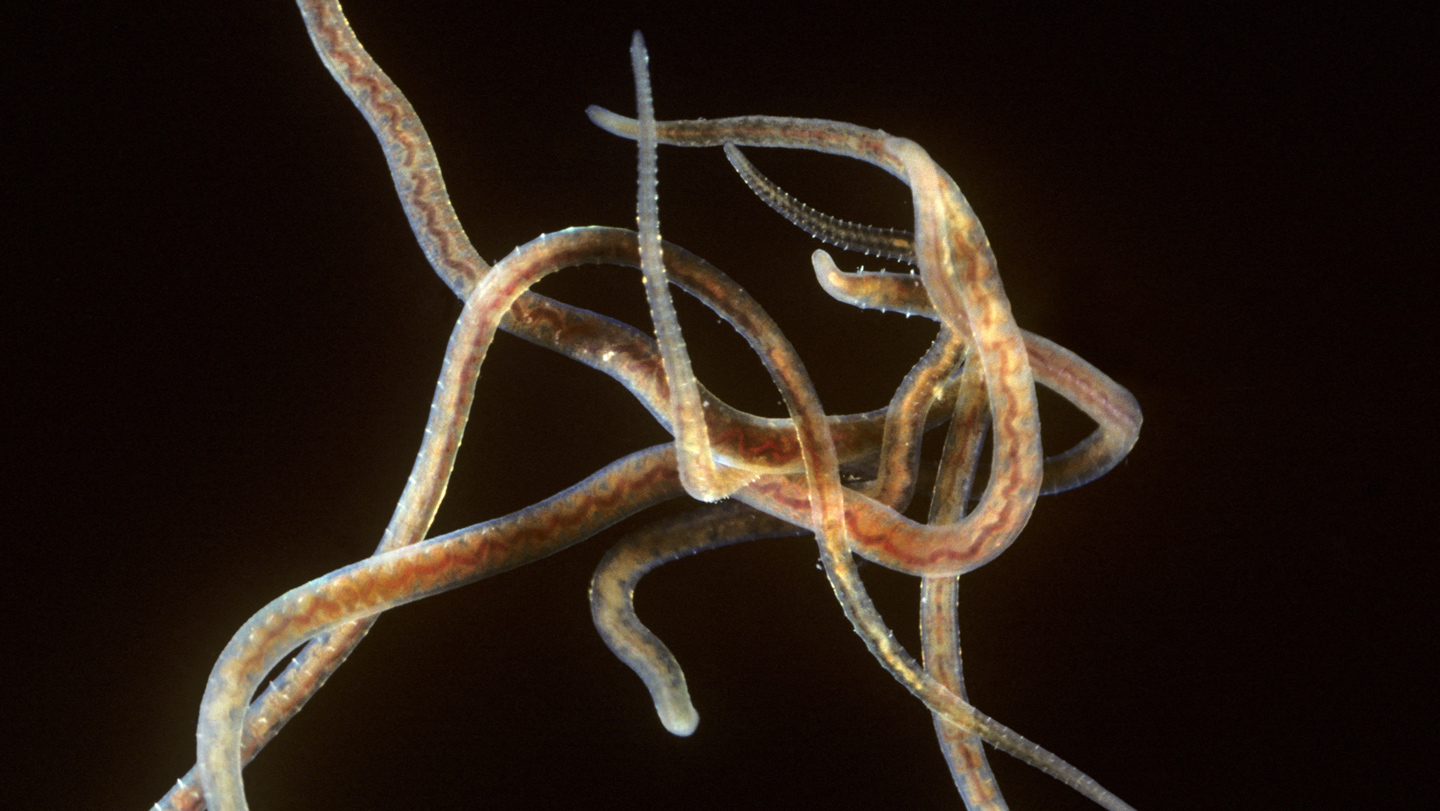
Contrary to human intuition, California blackworms (Lumbriculus variegatus) were observed to squeeze through confined water-filled glass channels much faster than they moved across wider ones. Experiments showed that when the channel width was about twice the worm's width, they could cross in about a minute, whereas wider channels took up to five times longer.
Computer simulations mirrored these results, with model worms exhibiting similar speed differences based on channel width. Physicist K.R. Prathyusha explained that in confined spaces, worms are restricted from reorienting and use the walls for support, allowing them to move forward more directly and without distraction.
Biomolecular engineer Saad Bhamla noted the potential applications for autonomous soft robots in inspecting pipes or delivering drugs. The team's mathematical model suggests that the speed is determined by the worm's flexibility and the available space, with a specific ratio of channel width squared to worm stiffness being a key factor.
A smaller ratio indicates less flexibility, enabling the worm to move straight and fast, while a larger ratio leads to more flailing and slower progress. This phenomenon is unusual in nature, as other biological systems, like snakes, tend to move slower in narrower spaces.
AI-samenvatting op basis van de bron.
Science News