Science News · Science
Lowest Energy Solar Neutrinos Detected
Scientists have detected solar neutrinos with the lowest energies ever recorded, using a detector primarily designed for dark matter research. This marks the first time a dark matter detector has identified neutrinos through their interaction with electrons.
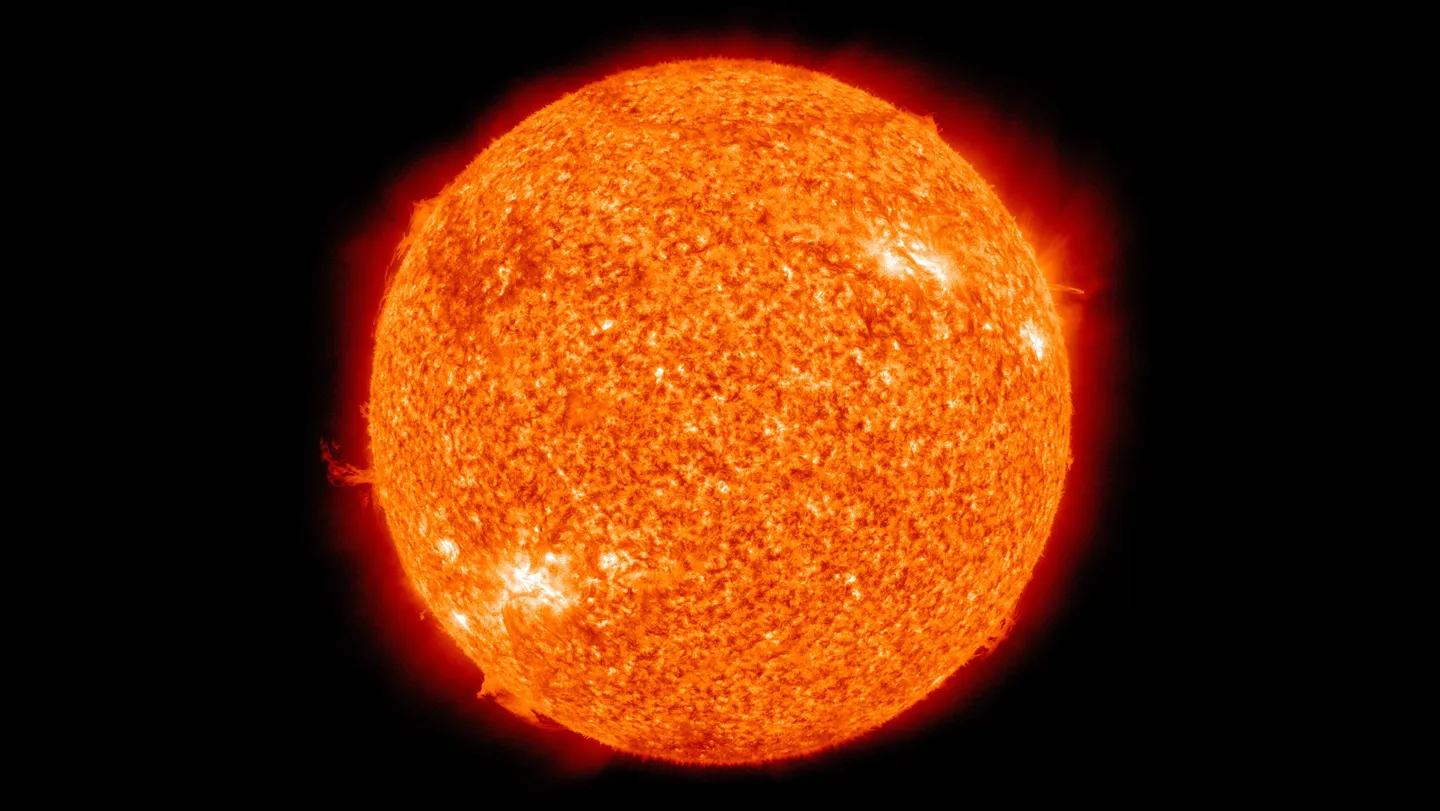
The XENONnT experiment, located in Italy, has identified hundreds of solar neutrinos. These particles, which have tiny masses and no electric charge, interact very rarely with matter, making them difficult to detect.
The detection was achieved by observing neutrinos interacting with electrons within the detector, producing light. This observation met the 5-sigma statistical benchmark, considered a definitive detection by physicists.
Previously, the PandaX-4T experiment in China had observed hints of low-energy neutrinos at a lower statistical significance (2.2 sigma).
The newly detected neutrinos possess energies as low as 17 kiloelectron volts, approximately one-tenth the energy of the weakest neutrinos previously detected. These low-energy neutrinos originate from the primary fusion reaction within the sun.
Researchers believe these neutrinos could reveal more about the sun's composition. A proposed advanced detector could potentially extract valuable knowledge about the sun.
Higher energy solar neutrinos, produced by a different fusion reaction, were detected by XENONnT and PandaX-4T in 2024. These are easier to detect as they interact with entire atomic nuclei.
Distinguishing the signature of low-energy neutrinos from background noise is challenging. The researchers are credited with a significant effort in isolating these signals from other interactions.
AI-samenvatting op basis van de bron.
Science News