Science News · Wetenschap
Early Universe May Have Hosted Rocky Planets
New computer simulations suggest that the universe's first rocky planets could have formed as early as 100 million years after the Big Bang, potentially billions of years earlier than previously thought.
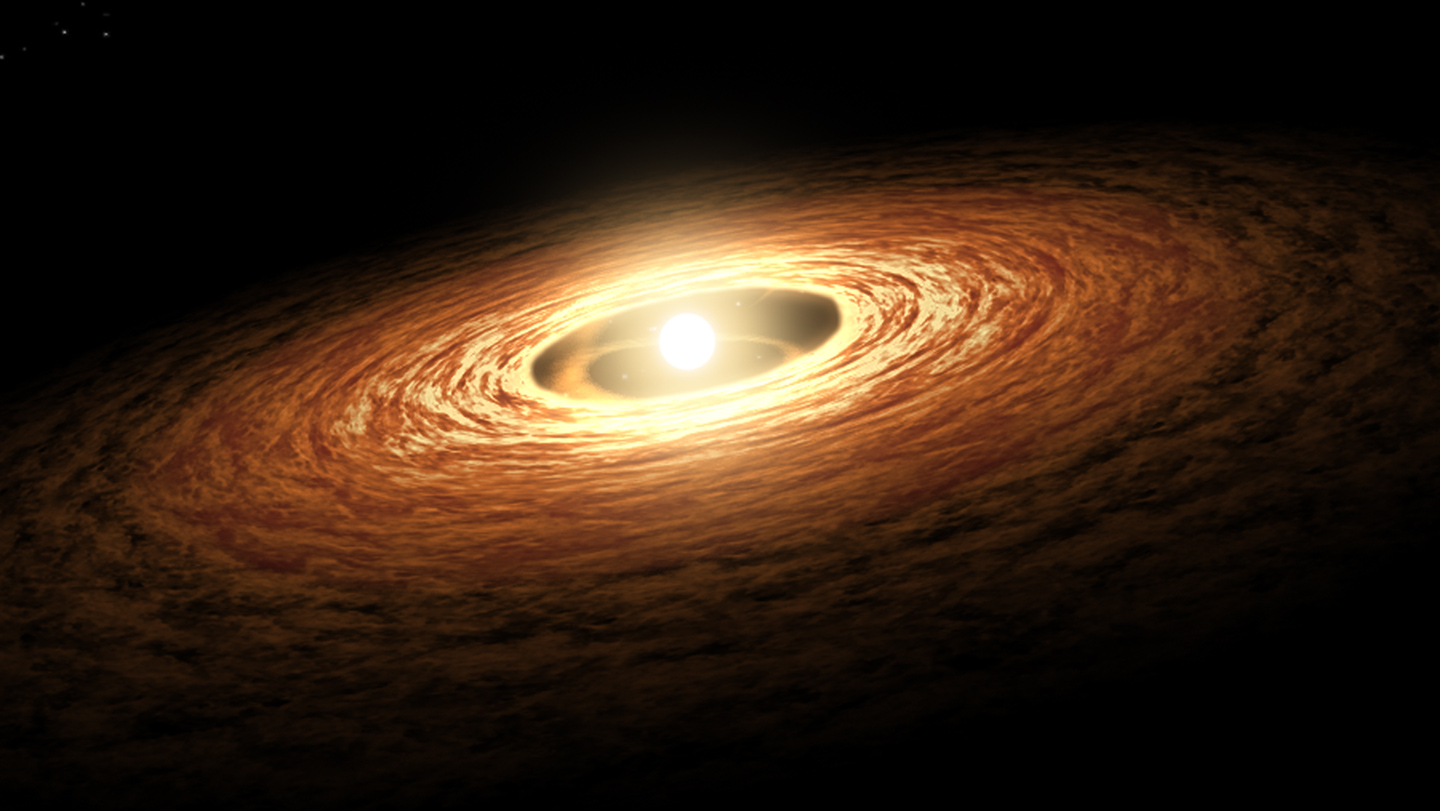
Explosions from the universe's earliest massive stars may have created localized regions rich in dust and heavy elements like iron and carbon, providing the necessary building blocks for planets. The simulation indicated the formation of enough rocky material to create several Earth-sized planets, with water also present in these young stellar systems.
Astronomers previously studied planet formation by simulating the accumulation of heavy elements. However, this new research focused on element-enriched debris fields left by the first giant stars after they exploded as supernovas. These regions, with higher heavy element content than the general universe, could have facilitated earlier planet formation.
The simulations tracked debris from pair instability supernovas, which produce significant amounts of heavy elements. This debris mixed with gas, eventually collapsing to form new stars surrounded by dusty disks. Within these disks, planetesimals—the precursors to planets—were found, with some forming at distances conducive to liquid water.
Researchers suggest that conditions for life might have been established very early in the universe's history. While planet formation doesn't guarantee life, the necessary ingredients could have been present almost from the beginning. It's possible some of these earliest planets still exist and could be identified in the Milky Way based on their chemical composition.
AI-samenvatting op basis van de bron.
Science News