designboom · Creativity & design
Fashion Runways Reimagined: 10 Shows That Broke the Mold
Traditionally, fashion show runways follow a simple, predictable path. However, several designers have creatively disrupted this format, transforming the catwalk into an integral part of the show's choreography and spectator experience.
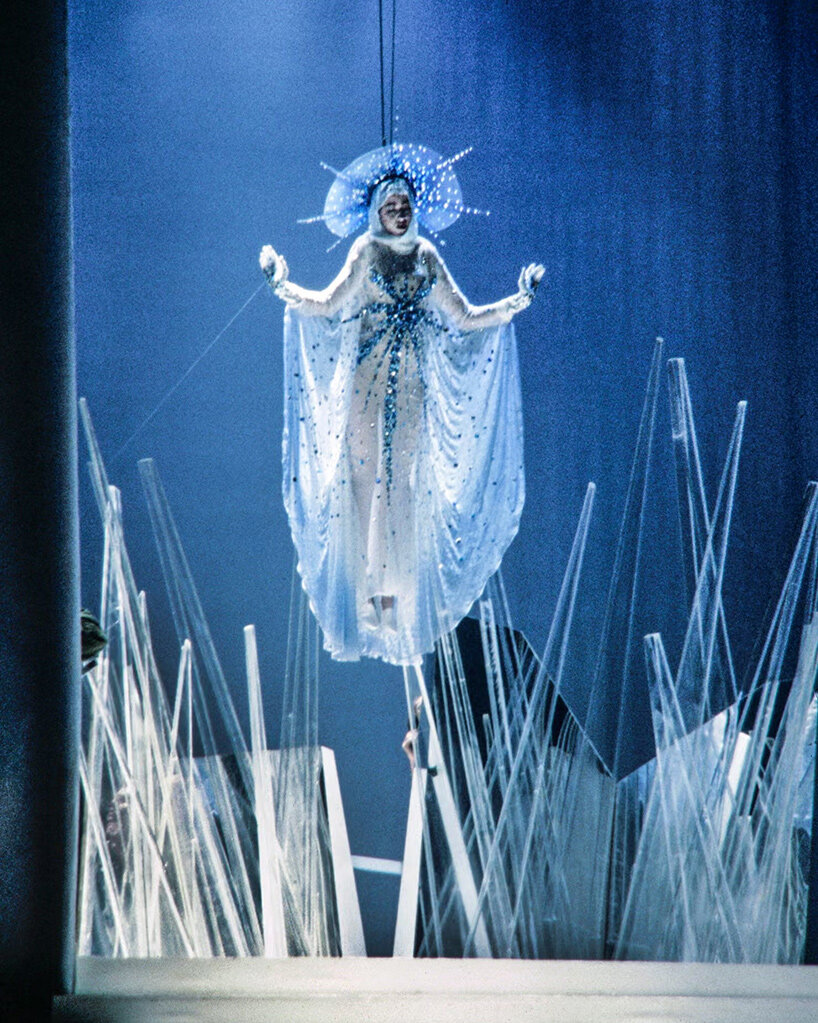
Thierry Mugler's Fall 1984 show utilized a vast arena, allowing models to appear at multiple points and creating a sense of distance and scale for the large audience.
Maison Martin Margiela's Spring/Summer 1990 show merged the runway with the audience space, as local children moved among models on a playground, blurring the lines between participant and observer.
Viktor & Rolf's Fall 1999 couture collection eliminated the runway entirely, featuring a model on a rotating platform where layers of clothing were added, focusing on accumulation rather than movement.
Alexander McQueen's Spring/Summer 2001 'Voss' show used a mirrored box, separating models from the audience and making the act of spectatorship a central theme.
Prada's Spring/Summer 2012 menswear show broke the audience into a grid on artificial grass, with models navigating multiple paths, creating a field of brief encounters.
Anya Hindmarch's Spring/Summer 2017 show revealed a sunken spiral runway only after a circular platform lifted, transforming a flat stage into a multi-levelled space.
Dior Men's Fall 2019 show replaced the catwalk with a moving walkway, keeping models stationary to emphasize the clothing, while Balenciaga's Spring/Summer 2020 show used a double spiral seating arrangement that formed the runway.
AI-samenvatting op basis van de bron.
designboom