Atlas Obscura · People & society
The Prince of the Lilies Fresco: Minoan Mystery
The iconic "Prince of the Lilies" fresco from Minoan Crete, widely recognized globally, is now understood to be a heavily reconstructed image with questionable origins.
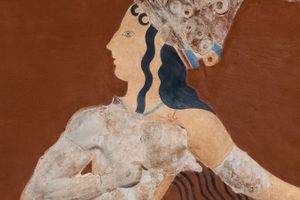
The fresco typically depicts a crowned, striding male figure in a garden, often interpreted as a king or priest-king from Knossos around 1500 BCE.
However, the original fresco was found in fragments, and its reconstruction by Arthur Evans' team, particularly by restorer Émile Gilliéron, involved significant guesswork to fill in missing parts.
Original fragments include a torso, a crown, and separate body pieces, which may not all belong to the same individual.
Scholars suggest the crown and torso could belong to different figures, potentially even a female boxer or a composite creature, challenging the male prince narrative.
This controversy highlights broader criticisms of Evans' work at Knossos, where his extensive reconstructions are seen by some as inventions rather than accurate restorations.
These reconstructions have been criticized for imposing a clear palace-and-king structure onto a civilization whose social organization is still not well understood.
AI-samenvatting op basis van de bron.
Atlas Obscura