Hackaday · Creativity & design
Understanding Negative Resistance
Negative resistance describes a phenomenon where current decreases as voltage increases, contrary to typical resistors. This concept has several interpretations and applications.
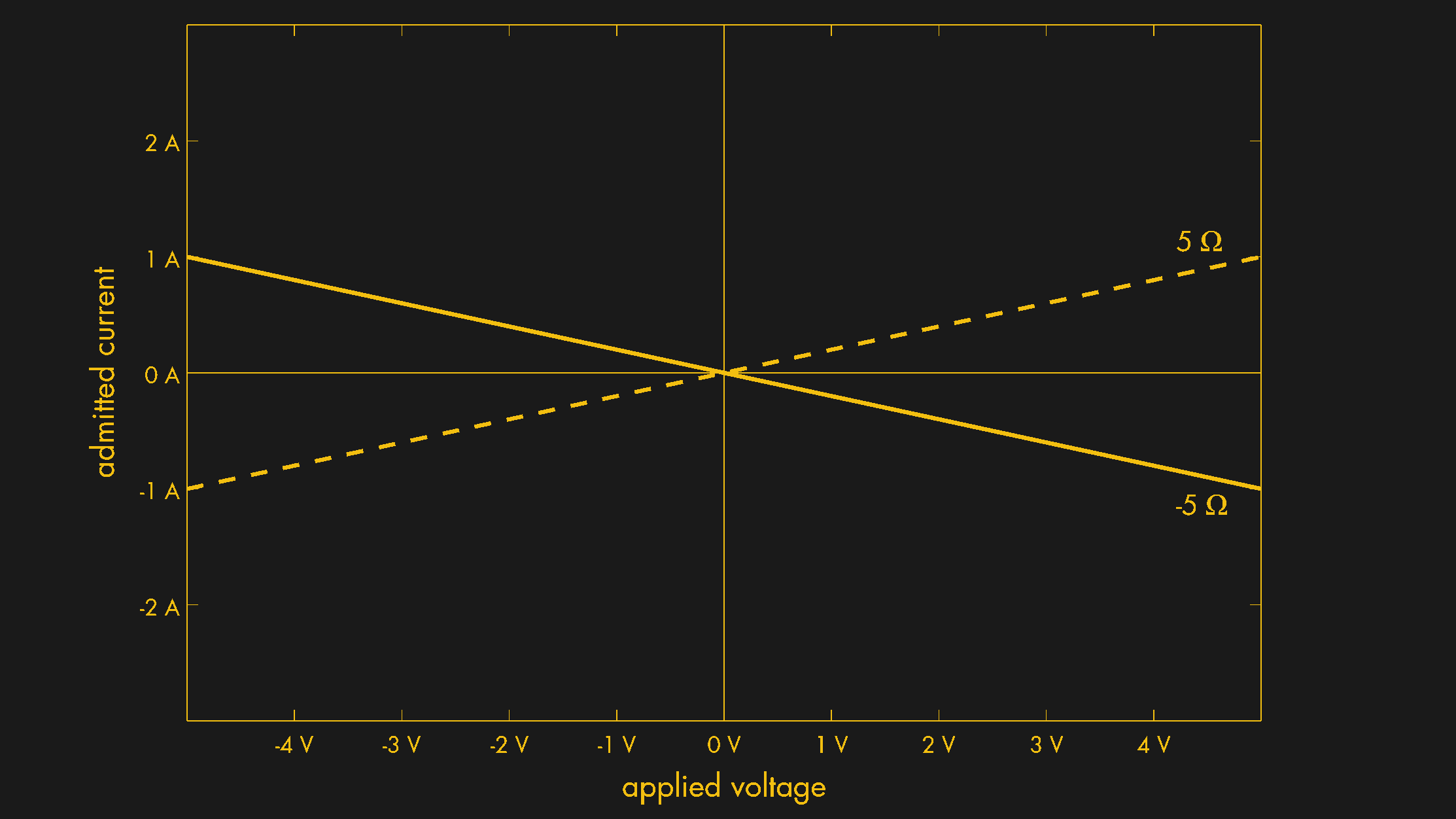
One common interpretation is Negative Differential Resistance (NDR). Devices exhibiting NDR have an I-V curve that slopes downward in certain ranges, meaning an increase in voltage leads to a decrease in current, or vice versa. Neon lamps, for instance, can show this behavior once they start glowing.
A true negative resistance, like a -100 Ω resistor, does not exist as a passive component because it would supply power to a circuit, requiring an external source. However, such a device can be constructed.
[lcamtuf] presents a design using an op-amp to simulate ideal constant negative resistance. This simulation is effective only within the device's operational limits; exceeding these can cause damage.
The practical utility of creating a literal negative resistor is limited to specialized scenarios. Nevertheless, understanding the concept is valuable due to its appearance in unexpected areas, such as with tunnel diodes.
AI-samenvatting op basis van de bron.
Hackaday