Dezeen · Creativity & design
Ten Monumental Brutalist Buildings in Asia
A new book, Brutalist Asia, highlights the continent's contributions to the architectural style, showcasing diverse interpretations by local and international architects. Editor Bob Pang shares his top ten selections from the collection.
The Inter-University Seminar House in Japan (1965) by Takamasa Yoshizaka, a protégé of Le Corbusier, features an inverted pyramid hall and hillside pavilions.
Kenzo Tange's Sacred Heart High School for Girls in Taiwan (1967) is his sole surviving work in the country.
Thailand's Round Building at Mahidol University (1968) by Amorn Srivong, who had no formal training, displays challenging cantilevers and organic geometry.
The Dafineh Museum in Iran (1978) by Nezam Ameri and Kamal Kamooneh is noted as their masterpiece, influenced by Frank Lloyd Wright.
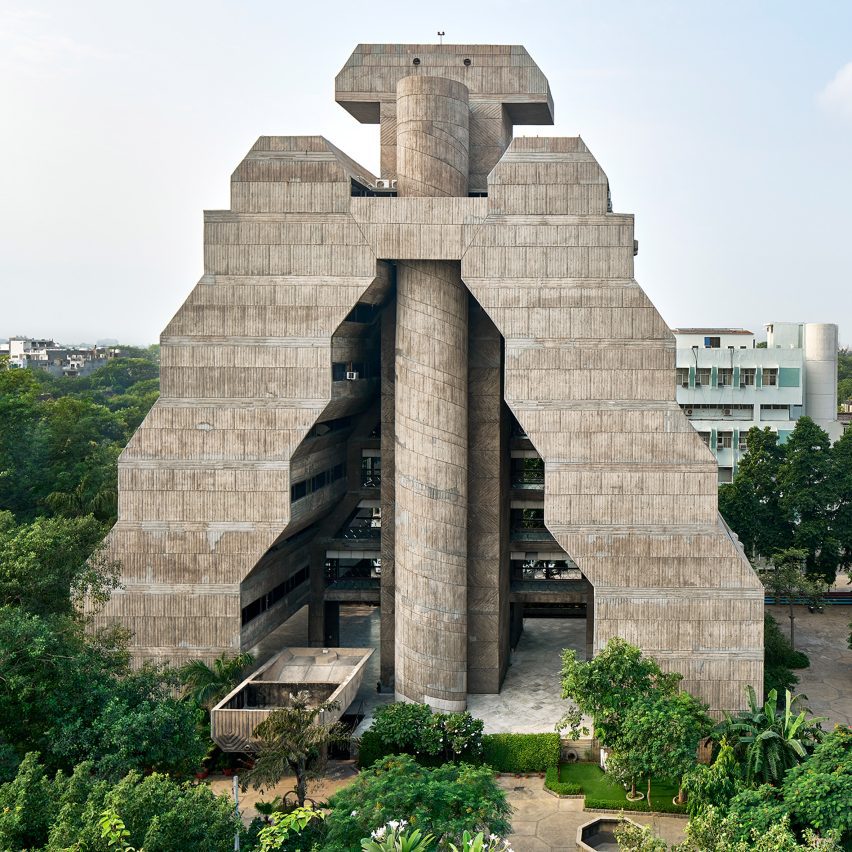
India's National Cooperative Development Corporation (1980) by Kuldip Singh, in collaboration with engineer Mahendra Raj, features bold forms and structures.
Hong Kong's St Stephen's College additions (1981) by Tao Ho were designed as a focal point for the campus, connected by walkways.
South Korea's Kyungdong Presbyterian Church (1981) by Kim Swoo-geun is inspired by praying hands, with vertical volumes abstracting fingers.
AI-samenvatting op basis van de bron.
Dezeen