NASA · Space
Guidance Issued for Aluminum Alloy 2219 Manufacturing
Improper casting and forging of aluminum alloy 2219 can lead to microstructural defects, affecting its performance in surface treatments and increasing corrosion susceptibility. This bulletin outlines risks and recommends specific manufacturing steps.
Aluminum 2219, developed in 1954, is an age-hardenable alloy used in aerospace applications like space shuttle fuel tanks and International Space Station modules due to its excellent properties at various temperatures and its weldability and workability.
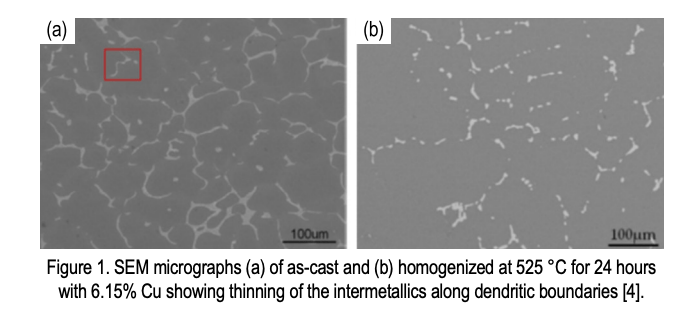
Casting 2219 aluminum alloy ingots for large structures can result in internal defects such as disparate grain sizes and macrosegregation of alloying elements. These defects can lead to poor mechanical properties and non-uniform material characteristics in the final product, which cannot be fully remedied by post-casting processes, especially for larger ingots.
A homogenization step after casting is crucial for improving the alloy's final properties. This process helps distribute copper atoms evenly throughout the aluminum matrix, dissolving residual phases and reducing segregation. Optimized homogenization parameters, verified by tools like X-ray Diffraction or Differential Scanning Calorimetry, are essential.
Studies demonstrate that homogenized aluminum 2219 exhibits superior mechanical and microstructural properties compared to non-homogenized material after forging and heat treatment.
Thermomechanical deformation, including forging and rolling, followed by solution treatment and aging, significantly refines the microstructure. This process leads to smaller, well-distributed particles and grains, resulting in improved and less anisotropic mechanical properties.
Recommendations include mandating homogenization after conventional direct chill casting in procurement specifications, with verification of its effectiveness. Multi-directional deformation is also advised to enhance particle distribution and recrystallization, leading to better mechanical performance.
AI-samenvatting op basis van de bron.
NASA