ArchDaily · Creativity & design
TAELON7's Limbo Engawa Installation Travels from Ghana to New York
TAELON7's site-specific installation, Limbo Engawa, has been reconfigured for Art Omi in New York after its initial presentation at Limbo Museum in Accra, Ghana. The project explores how modular architecture can adapt to different environments.
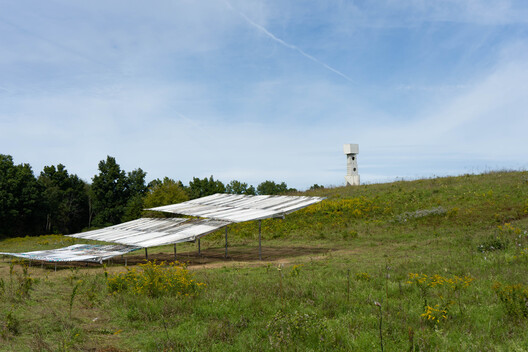
The installation, led by architect Juergen Benson-Strohmayer, uses the Japanese concept of 'engawa'—a transitional space—to create lightweight, movable structures. These structures aim to foster gathering and exchange, responding to the unique landscapes, climates, and cultural contexts of each location.
In Accra, Limbo Engawa was integrated into the unfinished concrete structure and grounds of Limbo Museum, creating spaces for rest and interaction within the existing urban and cultivated setting. It utilized modular components, including oversized daybeds and salvaged materials.
At Art Omi's Sculpture & Architecture Park in New York, the installation is adapted to a different environment characterized by fields, wetlands, and wooded areas. It now functions as a freestanding landscape pavilion, offering shaded areas and framing views of the surrounding natural landscape.
The shift in location alters the installation's role, moving from mediating between an unfinished building and land in Accra to establishing a transition between a freestanding structure and open landscape in New York. While the modular system and material language remain consistent, the configuration adapts to the new site's scale, climate, and vegetation.
The two presentations are viewed as related configurations rather than identical replicas, testing the adaptability of the architectural system. This joint commission between Limbo Museum and Art Omi highlights the connection between the institutions through a context-sensitive architectural intervention.
AI-samenvatting op basis van de bron.
ArchDaily