NASA · Space
Second-Generation Planet Suspected in Hubble Data
Astronomers have identified a potential second-generation planet orbiting a white dwarf star, based on unusual chemical signatures found in archival data from NASA's Hubble Space Telescope.
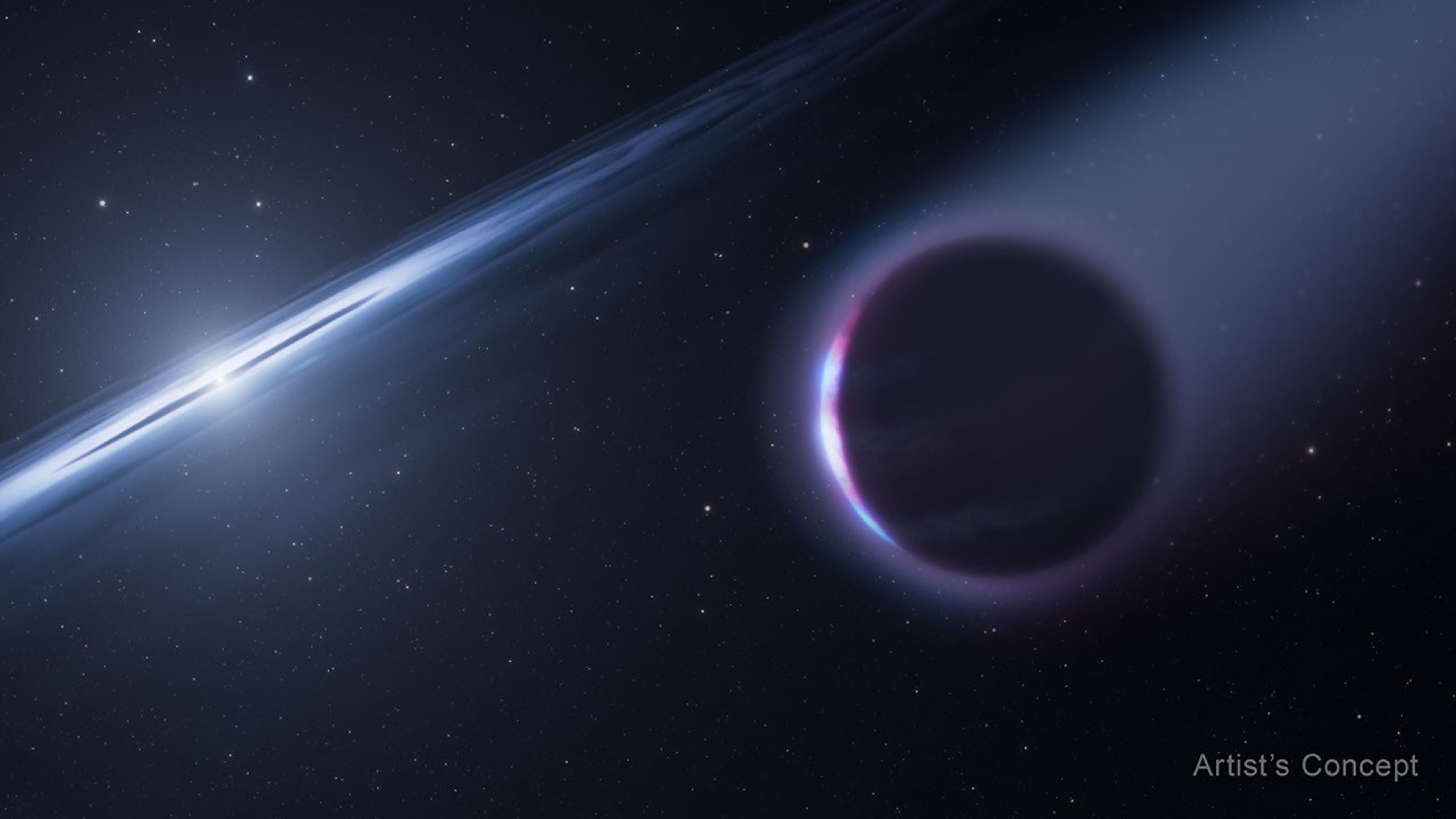
Researchers re-examined Hubble data from 1999 of the white dwarf star HS 0209+0832, discovering a high abundance of niobium, an element not typically found in such quantities. This element's presence suggests a planet formed from material ejected by the star as it died, rather than from the star's initial birth material.
This marks a potential discovery of a "second-generation" planet, a world forming around a stellar remnant. Such planets are distinct from "first-generation" planets like Earth, which form from a star's initial leftover material.
The research team theorizes that the ejected material coalesced into a gas giant planet, estimated to be Jupiter-sized and rapidly losing atmosphere due to the white dwarf's heat. Data from NASA's FUSE and TESS missions supported these findings, with TESS detecting brightness variations indicating a planet orbiting about 3.7 million miles away.
While the planet is losing mass, it is expected to survive as the white dwarf cools. Future research with Hubble aims to understand the formation, prevalence, and evolution of these unique celestial bodies.
AI-samenvatting op basis van de bron.
NASA