NASA · Space
Heat Dome Grips South-Central U.S. as Summer Ends
In mid-September 2026, a heat dome caused unseasonable and record-breaking temperatures across the south-central United States, despite the official end of astronomical summer.
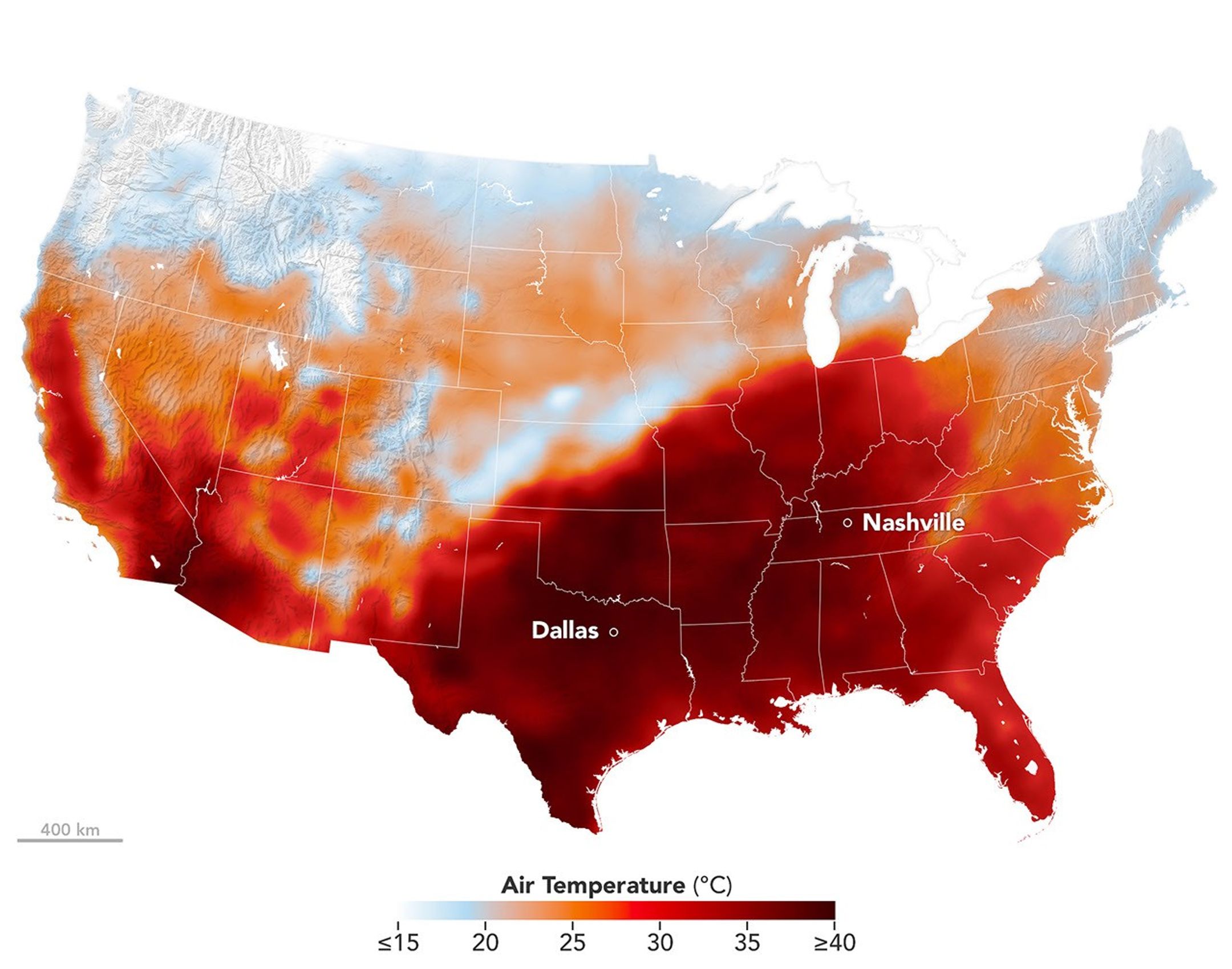
A NASA Earth Observatory map modeled air temperatures on September 15, 2026, showing dark red areas approaching or exceeding 40°C (104°F). Over 41 million people were under heat advisories or warnings. The high temperatures affected large parts of Texas, Oklahoma, Arkansas, Missouri, and Tennessee.
Meteorologists noted that high humidity, minimal cloud cover, and light winds intensified the heat's impact, increasing the risk of heat-related illnesses. Several cities, including Dallas, Memphis, and Nashville, set new daily high temperature records, with Nashville also breaking a daily-high minimum temperature record from 1927.
The phenomenon responsible was a heat dome, where high pressure in the upper atmosphere traps hot air near the surface, suppressing clouds and precipitation and allowing sunlight to further elevate temperatures.
This event followed the warmest June through August period on record for the contiguous U.S., which was 0.4°F warmer than previous records set in 1936 and 2021, according to NOAA.
AI-samenvatting op basis van de bron.
NASA