Dezeen · Creativity & design
Studio Saar's Pavilion at LDF Features Police and Rain Shields
Studio Saar's "The Pangolin Shield" pavilion, a landmark project for the London Design Festival, explores the colonial history between Britain and India. Located on The Strand, near Somerset House and India House, the pavilion's site holds historical significance related to the UK-India relationship.
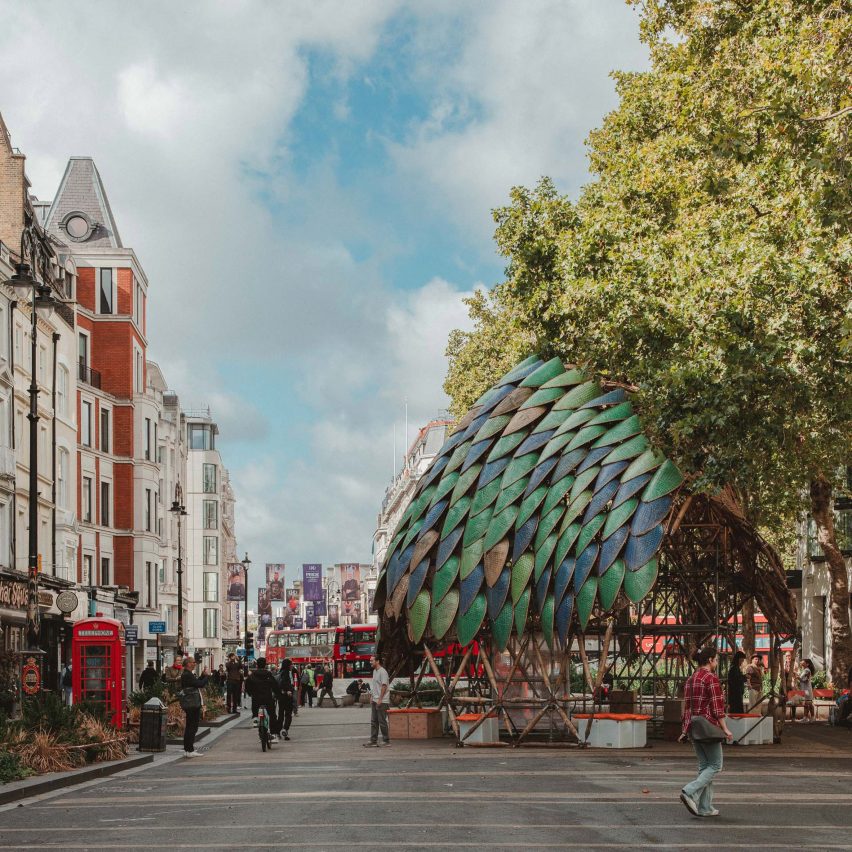
The pavilion, resembling a pangolin, is constructed from a bamboo grid shell. Its roof is layered with two types of shields: traditional Indian police shields used during the colonial era and woven rain shields (knups) used by farmers in Northeast India. This design symbolizes protection and aggression, reflecting historical contexts.
Studio Saar chose bamboo for its lightweight, durable, fast-growing, and biodegradable properties, allowing for unique shapes. The project was designed in collaboration with structural engineers Atelier One.
The location was chosen to highlight the evolving relationship between India and the UK, with Studio Saar being an Indo-UK practice. The pavilion faces a bust of India's first prime minister, Jawaharlal Nehru.
The pavilion's design was also inspired by the pangolin, the world's most trafficked mammal, aiming to bring the animal into public conversation. A pangolin sculpture is displayed inside.
Due to damage sustained during transport from India, the pavilion will be supported by internal scaffolding throughout the festival as a precautionary measure for public safety.
The project exemplifies Studio Saar's philosophy of combining humble, crafted elements to create significant structures, using the police and rain shields as a prime example.
AI-samenvatting op basis van de bron.
Dezeen