Dezeen · Architectuur
Six projects from Bin Wu that showcase design "articulated by the East itself"
Chinese interior designer Bin Wu's book Timeless East explores a design language rooted in Eastern philosophy, challenging the Western-filtered narratives of Eastern design. The book features 17 projects by Wu and his studio W Design, aiming to present Eastern design through a lens truer to its origins and promote spiritual connection.
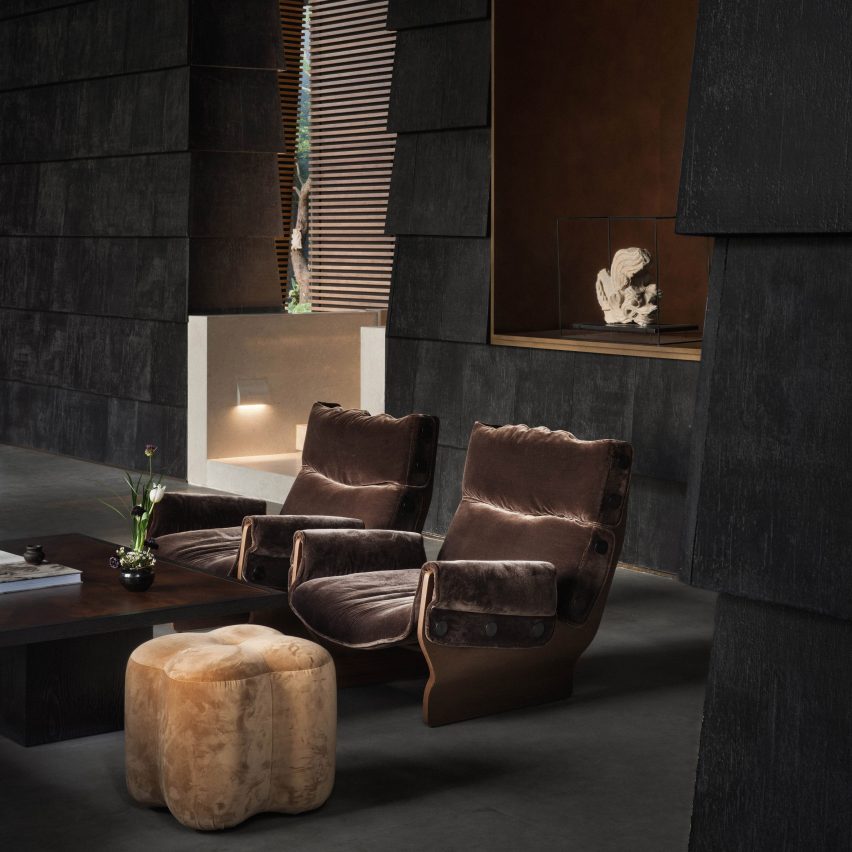
Wu states that historical Western interpretations like Japonisme and Chinoiserie were projections of the Eastern imagination through a Western lens, not authentic distillations of Eastern culture. He notes that this issue persists despite China's economic growth, and "The Design Language of Timeless East" is presented as a response from the Eastern perspective.
Hai Shang restaurant in Shanghai (2023) uses raw materials and a dark palette to create a mysterious atmosphere, with elements like stacked sea reeds and stone corridors evoking old Chinese water towns. Exposed beams and an ink stone countertop add historical context.
The Fame visitor centre in Chengdu (2024) utilizes locally sourced bamboo for its entrance hall, creating shifting light and shadow effects. Connecting corridors mimic Chinese garden principles of gradual revelation, and dark terracotta panels reference local roof tiles.
The Deqin Meri Poodom Hotel (2024), situated near a sacred Tibetan mountain, balances spirituality with daily life. Its central staircase is designed like a white pagoda, and interiors incorporate local objects like yak bells. Guest rooms frame views of Meri Mountain to connect visitors with Tibetan faith.
Collector's Mansion in Shanghai (2024) features a facade renovation and a display apartment. The apartment's interiors use a restrained palette and tactile furniture to create a tranquil atmosphere, with a living room opening from a narrow foyer.
Pan Yuan: Momentality Unfold, an installation in Milan (2024), used large-scale paper scrolls to create an Eastern garden experience, reflecting the Eastern architectural emphasis on finding eternity within impermanence. The installation used DuPont Tyvek paper, mimicking traditional Xuan paper.
Arbour in Shanghai (2025) is an "indoor theatre" residence designed with soft lighting, a spiral staircase, and vintage furnishings to evoke nostalgia. Drapes soften spatial boundaries, and wood elements add warmth.
AI-samenvatting op basis van de bron.
Dezeen