Hackaday · Creativity & design
Scientists Create Hexagonal Packed Ice at Extreme Pressures
Researchers have created a new form of ice, hexagonal close-packed (HCP) ice, under extreme pressures and temperatures similar to those found in the cores of ice giant planets like Neptune and Uranus.
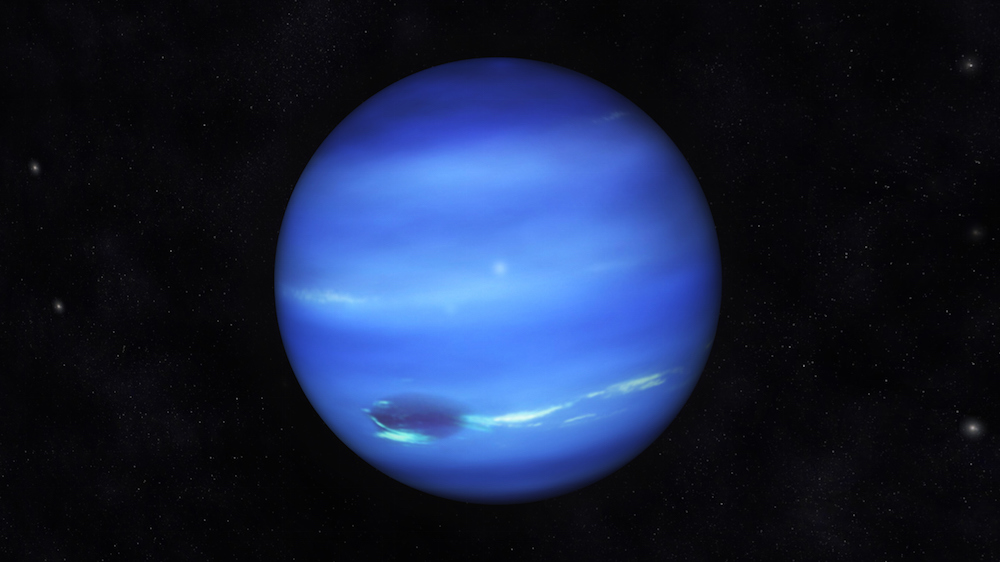
Investigating planetary interiors is challenging, often requiring extrapolation from surface data. A key question concerns the state of water ice at the intense pressures within ice giants.
This study focused specifically on water ice, using a diamond anvil to replicate extreme pressures and laser heating to reach high temperatures.
Synchrotron X-ray diffraction was employed to observe changes in the water sample.
The phase diagram of water includes numerous phases beyond common ice. At pressures above 80 GPa, ice X forms with a body-centered cubic (BCC) oxygen sublattice.
Subsequent discoveries included face-centered cubic (FCC) and now hexagonal close-packed (HCP) ice, distinguished by their oxygen sublattice packing.
At approximately 2,000K and over 200 GPa, the HCP phase was observed, with a mixed FCC-HCP phase appearing at intermediate pressures.
While not directly answering questions about specific ice giants, these findings provide valuable data for planetary scientists studying these celestial bodies and the complex phases of water.
AI-samenvatting op basis van de bron.
Hackaday