designboom · Creativity & design
Bear Scars Transform Japanese Cedar into Surfboards
A project in Kyoto, Japan, repurposes cedar wood damaged by Asian black bears into unique surfboards, highlighting an innovative approach to forestry challenges.
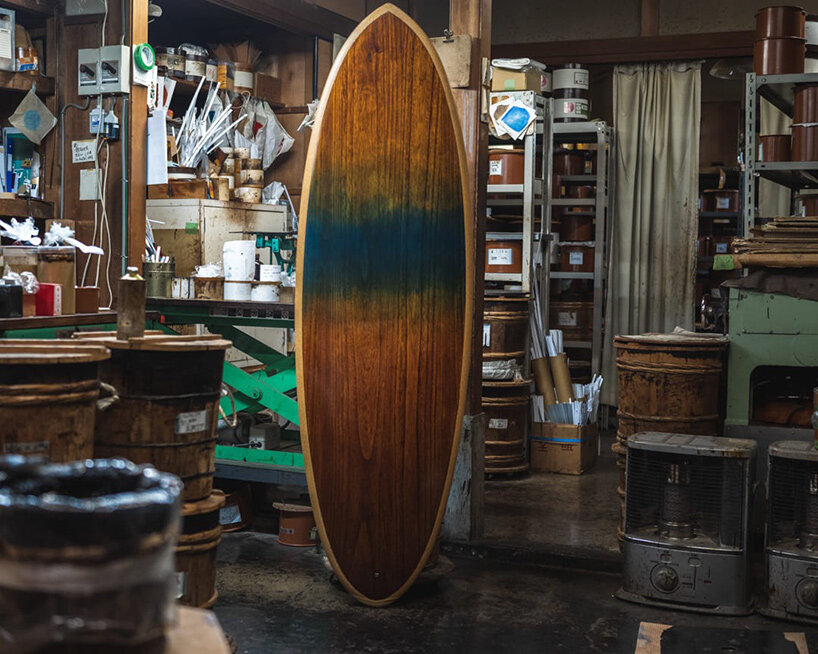
Asian black bears in Keihoku, Kyoto, strip bark from cedar and cypress trees, leaving wounds that cause irregular grain. This 'kumahagi' phenomenon typically reduces timber's value. The BEARS WOOD PROJECT, launched in 2022, uses this bear-damaged wood for its surfboards.
The project, a collaboration between Tsutsumi Asakichi Urushi lacquer shop, foresters, and woodworkers, features 'siita' brand surfboards. These boards showcase the altered grain, enhanced by a glossy urushi lacquer finish.
Takuya Tsutsumi, head of Tsutsumi Asakichi Urushi, applies urushi lacquer to modern objects. He works with shaper Rodrigo Matsuda, who shapes the wood while Tsutsumi applies the urushi finish, adjusting for environmental conditions.
The bear damage is a significant forestry issue, though reasons are not fully understood. The BEARS WOOD PROJECT aims to maintain the economic utility of this damaged timber by incorporating the unevenly grown areas around the wounds.
Collaborators purchase affected trees at a fair price. The bear scar, once a defect, becomes a distinguishing aesthetic feature and an economic consideration.
The siita surfboards are inspired by traditional Hawaiian alaia boards. Tsutsumi's earlier experiments led to siita, launched in 2023. The process preserves the forest's history within the board.
AI-samenvatting op basis van de bron.
designboom