NASA · Space
Hydrazine Freeze-Thaw Risks and Mitigation
NASA's Langley Research Center has issued a technical bulletin detailing the risks associated with freeze-thaw cycles in hydrazine monopropellant systems. These cycles can compromise system reliability and pose safety hazards.
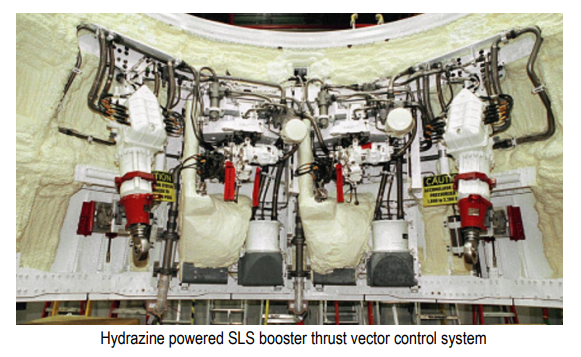
Hydrazine freezes at 1.6°C, and its phase transitions can cause structural damage. Freezing can lead to "superpacked" conditions, causing lines or fittings to rupture upon thawing. Elastomeric components in valves and seals may crack or distort, leading to leaks.
Partially thawed hydrazine can form slush, obstructing flow, altering mass flow rates, and causing thruster malfunctions. Damage from freezing can also lead to hazardous leaks, exposing ground crews to toxic and reactive substances.
Historical incidents, such as those on the Space Shuttle and Voyager missions, highlight these risks. Shuttle systems could rupture from freeze-induced contraction and thaw-induced expansion, limiting them to two cycles. Voyager faced mission-threatening blockages and malfunctions.
To mitigate these risks, it is recommended to maintain hydrazine systems above freezing using heaters, insulation, or warm gas purges. Uncertainty analysis in modeling and testing is crucial to ensure adequate margins.
If freezing is suspected, systems should be suspended until an engineering evaluation is completed. Each freeze-thaw cycle should be treated as life-limiting, requiring static and fatigue assessments.
Integrity verification, including pressure decay tests and valve health assessments, is necessary. Thawing should be slow and uniform to prevent overpressure. Thermal stabilization periods are essential before operating thrusters and valves.
High-fidelity thermal modeling, rather than relying solely on bulk temperatures, is advised. All freeze exposures must be documented as anomalies, with hardware life reduction tracked accordingly.
AI-samenvatting op basis van de bron.
NASA