Hackaday · Creativity & design
InjectEave Technique Revives TEMPEST Attacks
Researchers have developed a method called InjectEave that can turn modern electronics into effective transmitters for TEMPEST attacks, which exploit unintended radio emissions from devices.
TEMPEST attacks traditionally involve capturing unintended radio emissions from electronic devices to reconstruct their internal operations. This method was more effective with older CRT displays and has become less so with modern, quieter components.
The InjectEave technique involves irradiating a device with a radio frequency signal tuned to its internal antennas. This injected frequency mixes with the device's internal signals through nonlinear components, creating radiating RF sidebands.
This mixed signal can then be captured and demodulated to recover the device's internal operations. The researchers successfully tested this on various semiconductor devices, including amplifiers and converters, finding no significant emissions without the injected signal.
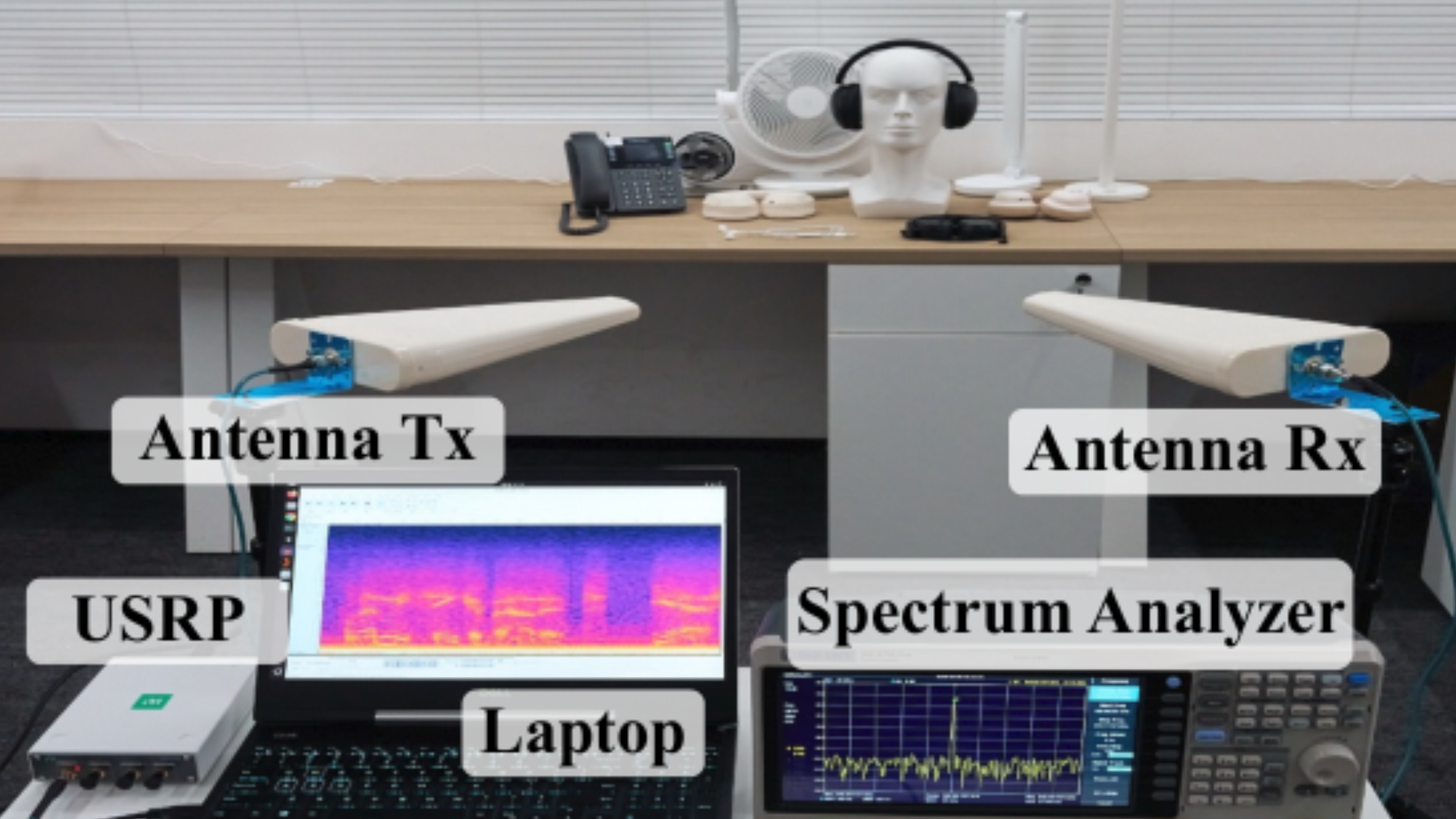
A portable setup using an SDR for transmission and a spectrum analyzer for demodulation recovered audio from wired and wireless headphones, and a wireless landline. It also detected the state of a smart lamp and fan.
The technique worked over short distances, even through walls, and a power amplifier extended the range to 30 meters. The researchers could isolate specific devices by tuning the injection frequency.
In a demonstration with a VoIP phone, the researchers could listen to a caller, clone their voice, synthesize new speech, and inject it into the call in real-time, altering the conversation.
This technique could potentially be used to find bugs or other electronics, and an open-source implementation is anticipated, similar to traditional TEMPEST attacks.
AI-samenvatting op basis van de bron.
Hackaday