Mongabay · Climate & nature
Rare Succulent Critically Endangered by Mining and Development
The brown clockfig, a rare succulent found in the arid border region of Namibia and South Africa, has been classified as critically endangered by the IUCN.
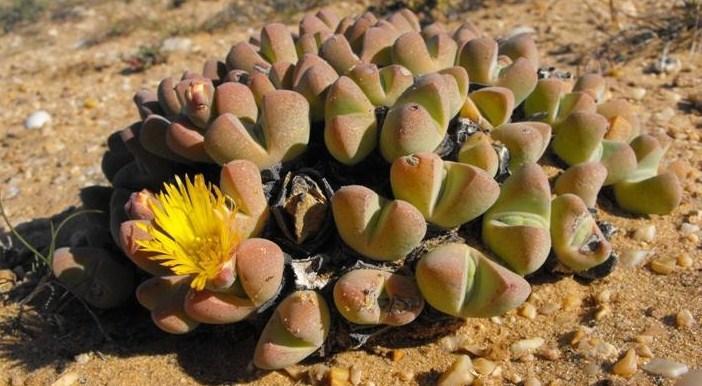
The species (Cheiridopsis brownii) grows in the western Gariep Valley across harsh, arid terrain. Its total range is approximately 424 square kilometers, but it occupies only about 60 square kilometers.
Major threats include habitat loss from overgrazing and mining operations, particularly for diamonds. Mining permits have increased pressure on the plant's limited habitat in both countries.
Botanist Pieter van Wyk noted that desertification from overgrazing and coastal sand movement due to unrehabilitated mines are threatening the South African population. New large-scale green hydrogen projects are also a concern.
A severe drought from 2012-2020, combined with other factors, has led to a 50-90% population decline since 1992. Climate change is expected to worsen these pressures with higher temperatures and less rainfall.
The IUCN assessment projects an additional 80-100% population loss by 2052. Currently, no targeted conservation activities are underway for the plant.
Protecting the brown clockfig is crucial as it supports insects that sustain local spiders and reptiles adapted to the extreme environment. The Richtersveld Desert Botanical Garden is collecting specimens, including seeds from areas slated for diamond mine destruction.
AI-samenvatting op basis van de bron.
Mongabay