Carbon Brief · Klimaat
China's 15th Five-Year Plan for Coal: A Balancing Act for Climate Goals
China's National Development and Reform Commission and National Energy Administration have released the 15th Five-Year Plan for the coal industry (2026-2030), a critical period leading up to the nation's pledge to peak carbon emissions before 2030. While the plan emphasizes coal's foundational role in energy security, it also signals a transition for the industry.
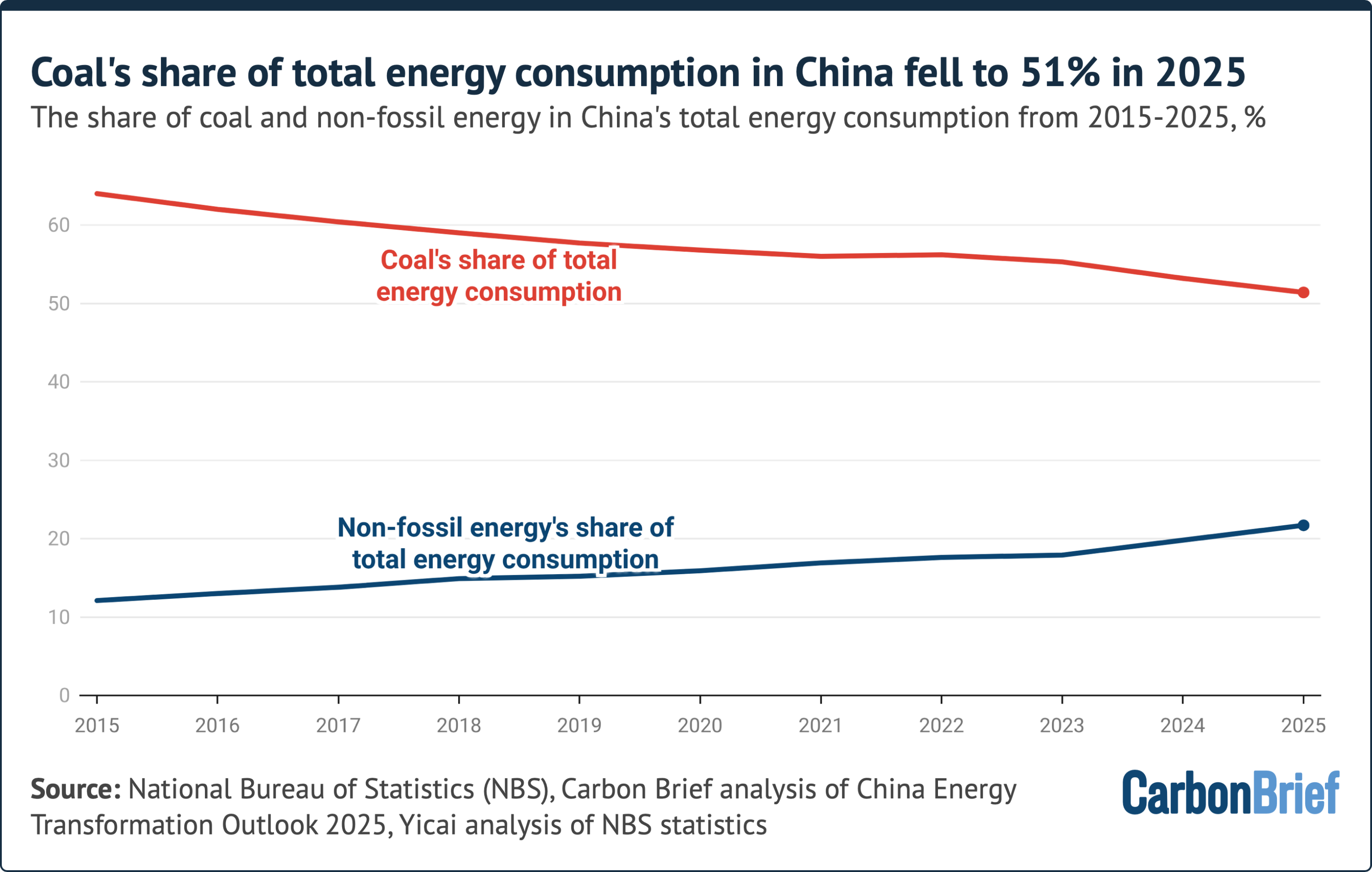
The plan aims to strengthen coal's role as a 'bottom-line guarantee' for energy security, particularly in light of global energy market volatility. Key targets for 2030 include peaking coal consumption, establishing a modern coal industry, optimizing production, and improving the clean and efficient use of coal. However, it does not set a specific government-endorsed year for peaking coal consumption, instead stating it will be achieved within this five-year period, guided by dual-carbon goals but prioritizing secure energy supply.
Analysts suggest the plan reinforces coal's importance as a cheap and secure energy source, rather than charting a phase-down. The plan reiterates the need for coal-supply security bases in northern China, with new mines requiring a minimum annual production capacity of 1.2 million tonnes, indicating a move towards a more concentrated and efficient coal system. Central government approval is required for any new production capacity.
Regarding greenhouse gas emissions, the plan calls for the 'low-carbon transition' of the industry and the 'clean and efficient use' of coal, promoting energy efficiency and electrification at mines. It also reaffirms existing policies for energy conservation and emission reduction. A significant focus is placed on utilizing coalbed methane, with targets for increased production and utilization by 2030 to enhance energy security and reduce emissions, though an absolute methane emissions reduction target is not established.
The plan also directs coal companies to evolve by strengthening management of mine closures and workforce transitions. It encourages diversification into sectors like power, new energy, and chemicals, with a particular emphasis on using coal as a feedstock for chemicals. This strategic shift aims to decarbonize production within the coal-chemicals industry.
AI-samenvatting op basis van de bron.
Carbon Brief