Atlas Obscura · People & society
The 'Pyramid of Verlée': A Misunderstood Monument
A stone obelisk in Havelange, Belgium, known as the 'Pyramid of Verlée,' has long been a subject of mystery and speculation, often misidentified as the country's only pyramid.
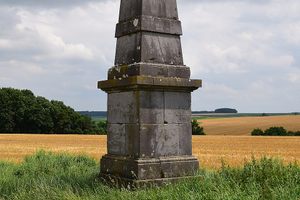
Located in the hamlet of Verlée, this early 19th-century obelisk stands in the countryside with no inscriptions or explanations. Its only dating clue is carved garlands at the top, suggesting the Empire period.
A popular theory posited it was a topographical landmark for French Colonel Jean-Joseph Tranchot's 1801-1813 Rhine region survey. However, this is incorrect as Tranchot's preserved maps do not include this area.
Historical maps reveal a now-lost castle, the 'Château de Bouillon,' 750 meters north-north-east of the monument. The road leading to the obelisk aligns with the axis between the castle and the monument, with one side of the obelisk precisely aligned with this axis.
This suggests the monument marked the end of a castle's axis, a design feature found in other European estates like La Hulpe Castle, Het Loo Palace, Château de Vaux-Le-Vicompte, and Wilhelmshöhe Castle.
Originating from the Palace of Versailles, such grand central axes symbolized royal power and were common in French garden designs. When a monumental axis was impossible, a constructed monument served as a focal point.
The 'Pyramid of Verlée' is thus a decorative garden feature of a demolished castle, not a unique landmark as often claimed online. Many websites repeat unverified information, perpetuating the myth of Belgium's 'only pyramid'.
AI-samenvatting op basis van de bron.
Atlas Obscura