Hackaday · Creativity & design
Sodium-Water Generator: A Volatile Power Source
A demonstration of a 1970s patent for a portable generator utilizing sodium and water highlights its potential dangers and practical limitations.
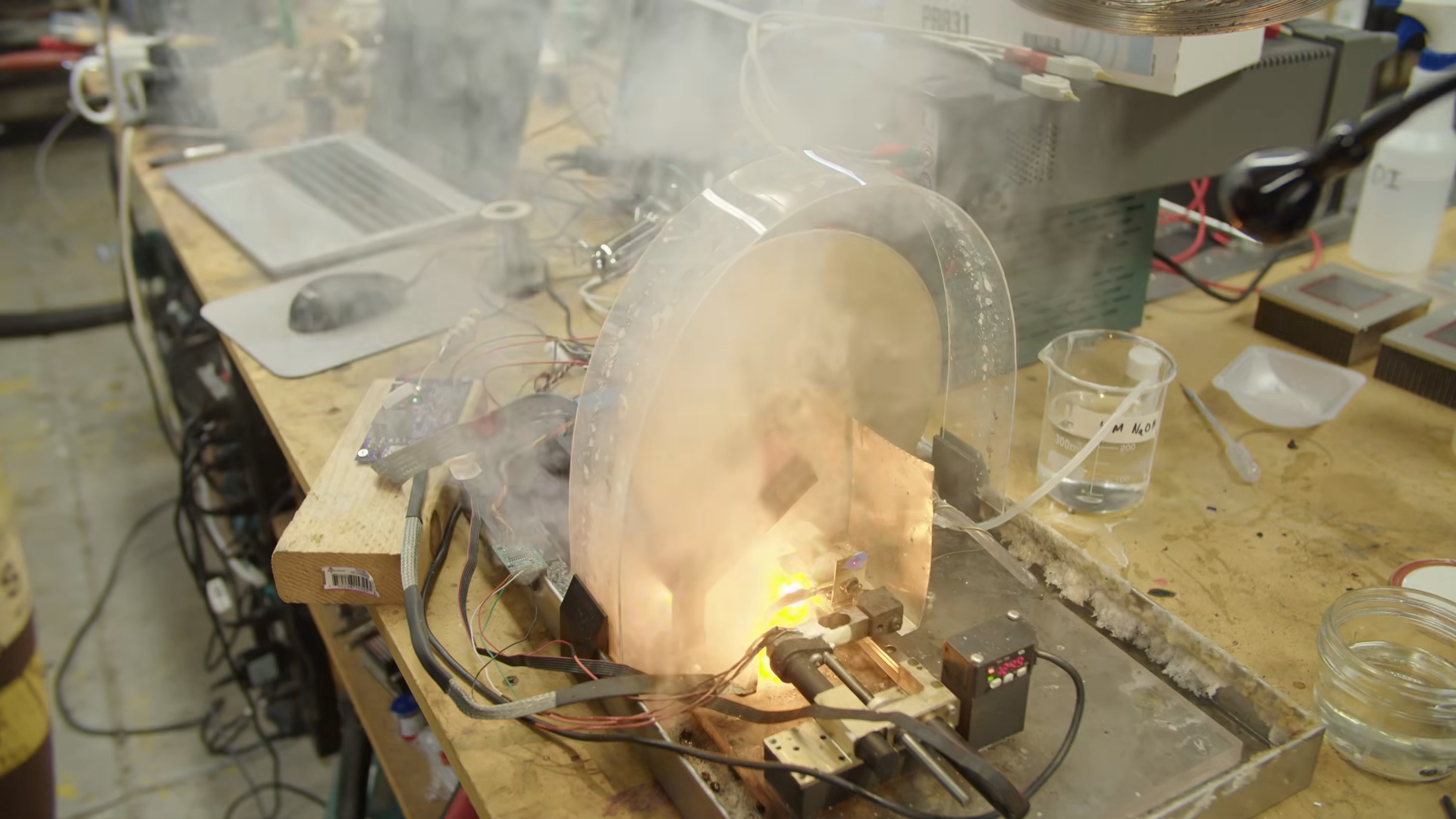
The generator operates on the principle that sodium and water combust spontaneously, but this reaction can be controlled if power is drawn quickly enough. Insufficient power draw can lead to an explosion.
The device features a spinning metal disk with a sodium electrode positioned very close to it. Water flows through the narrow gap, enabling electricity to flow between the electrodes.
This appears to be the only publicly available device based on this principle. The original inventor's work is not well-documented.
Mechanical challenges include connecting to the spinning disk and maintaining a narrow gap as the sodium electrode erodes. The patent suggests a spring, but lacks specifics.
A slip ring arrangement was not feasible due to high resistance, leading to the use of a liquid-metal contact with a gallium, indium, and tin alloy.
The original disk was stainless steel, later plated with nickel for better conductivity. The design is considered impractical and unsafe, though scientifically interesting.
While the patent claimed significant power output, practical results shown in the video are less impressive. The creator offers suggestions for improvement on GitHub.
AI-samenvatting op basis van de bron.
Hackaday