Hackaday · Creativity & design
CFD Analysis Compares Toroidal vs. Conventional Propellers
Researchers explored the efficiency of toroidal propellers compared to conventional designs using computational fluid dynamics (CFD). The study aimed to determine if toroidal propeller designs offer any advantages.
A conventional, highly optimized propeller was simulated using CFD, yielding an efficiency of approximately 73%. This served as a baseline for comparison.
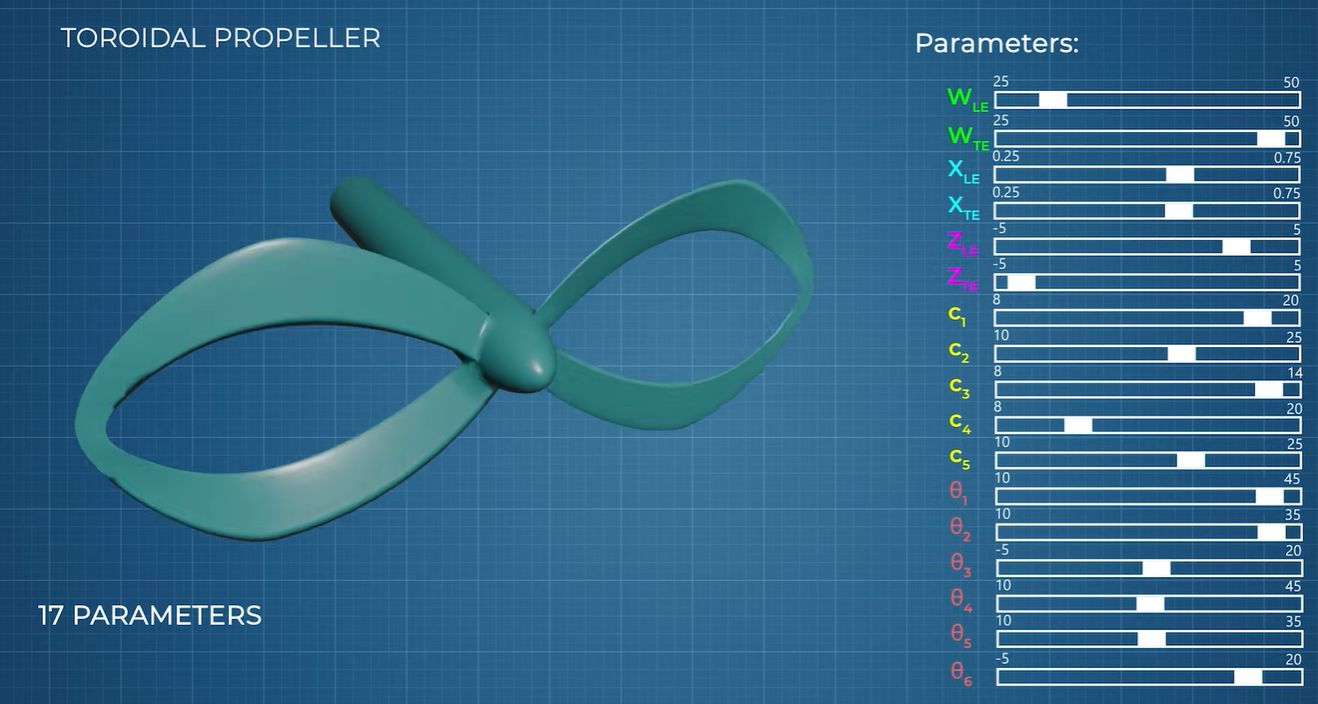
To optimize a toroidal propeller shape, a brute-force CFD approach was deemed too time-consuming. The study employed a multiple reference frame (MRF) technique to accelerate the selection process, which still took two months.
An artificial neural network was trained to analyze the vast amount of data generated by the MRF simulations, automating the filtering of optimal designs and converging on a single toroidal design.
The initial toroidal design, designated G1401, showed a simulated efficiency of 62.9%. Further iterations focused on optimizing airfoil shapes.
The final toroidal propeller design was 3D printed, but the initial prints were too thin and flexible for practical use, requiring significant manual design adjustments for printability.
The final printed design achieved less than 62% efficiency. However, limitations in the comparison include a commercially produced conventional propeller versus a DIY resin-printed toroidal one.
The study suggests that significant improvements from toroidal propellers are unlikely, as they have not become widespread in applications like drones or aircraft.
AI-samenvatting op basis van de bron.
Hackaday