designboom · Creativity & design
Artwork That Challenges Peripheral Vision
Several 20th-century artists and designers experimented with artworks that extend beyond the viewer's central field of vision, prompting physical engagement and a re-evaluation of how we look at art.
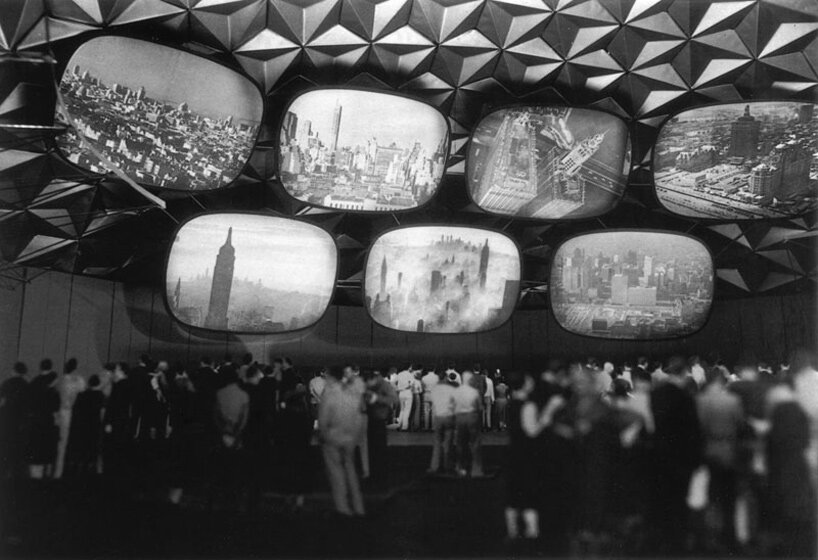
Artists like Mark Rothko, Herbert Bayer, Charles and Ray Eames, and Lina Bo Bardi created works that exceed a single viewpoint, making looking a physical act requiring viewer movement and spatial engagement.
Rothko's large canvases aimed for intimacy, immersing viewers in color fields beyond direct sight, with specified close viewing distances.
Barnett Newman's 'Vir Heroicus Sublimis' uses scale to encourage close viewing, creating an 'engulfing environment' through viewer proximity.
Herbert Bayer's 'Diagram of the Field of Vision' showed how exhibition design could incorporate images above and below eye level.
The Eameses' 'Glimpses of the U.S.A.' used seven screens projecting thousands of images, overwhelming attention and making focus a choice.
Lina Bo Bardi's design at MASP lifts paintings onto transparent easels, creating a 'forest' of art with overlapping views.
These methods make the viewer aware of their physical presence within a visual system, distinct from 'immersive' art by keeping their techniques exposed.
AI-samenvatting op basis van de bron.
designboom