Hackaday · Creativity & design
Neutrino Laser Concept Deemed Unlikely by MIT Research
Recent research from MIT suggests that the creation of a neutrino laser, a device that would emit a beam of neutrinos, is likely impossible.
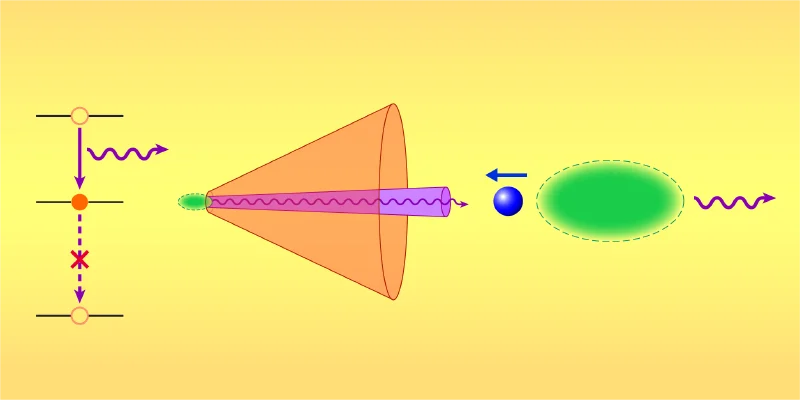
The concept of a neutrino laser aimed to use the superradiance effect, similar to how photon lasers work with Bose-Einstein condensates (BECs). This effect involves stimulated emission from a BEC, resulting in a synchronized beam.
However, applying this to a BEC of radioisotopes that emit neutrinos presents significant challenges. Neutrinos are extremely fast and possess much higher kinetic energy (1+ MeV) compared to photons (1 eV).
This high speed and energy mean that a neutrino's emission has a substantial kinetic effect on the emitting particle, leaving very little time for other particles in the BEC to be influenced.
Calculations indicate that superradiance cannot occur with neutrinos in a BEC, effectively ruling out the possibility of a neutrino laser based on this mechanism.
Furthermore, research questions whether a BEC of radioisotopes would enhance radioactive decay at all, with findings suggesting it does not.
While absolute proof of impossibility is difficult, these two studies significantly diminish the prospects for developing a neutrino laser.
AI-samenvatting op basis van de bron.
Hackaday