NASA · Space
NASA Tests Enhance Aviation Safety Against Supercooled Large Droplets
NASA is conducting tests in its Icing Research Tunnel to better understand and address the aviation hazard posed by supercooled large droplets (SLD). This phenomenon occurs when aircraft encounter unusually large, cold water droplets that remain liquid and can freeze on surfaces, including areas behind conventional ice protection systems.
Aircraft are designed for typical icing conditions with droplets up to 100 microns. However, SLD can involve drops up to 2,000 microns, posing a greater risk as they can impact further back on the aircraft.
Current engineering tools used by the aviation industry are effective for typical clouds but may not fully account for the physics of SLD. NASA's research aims to validate these tools and improve aircraft design.
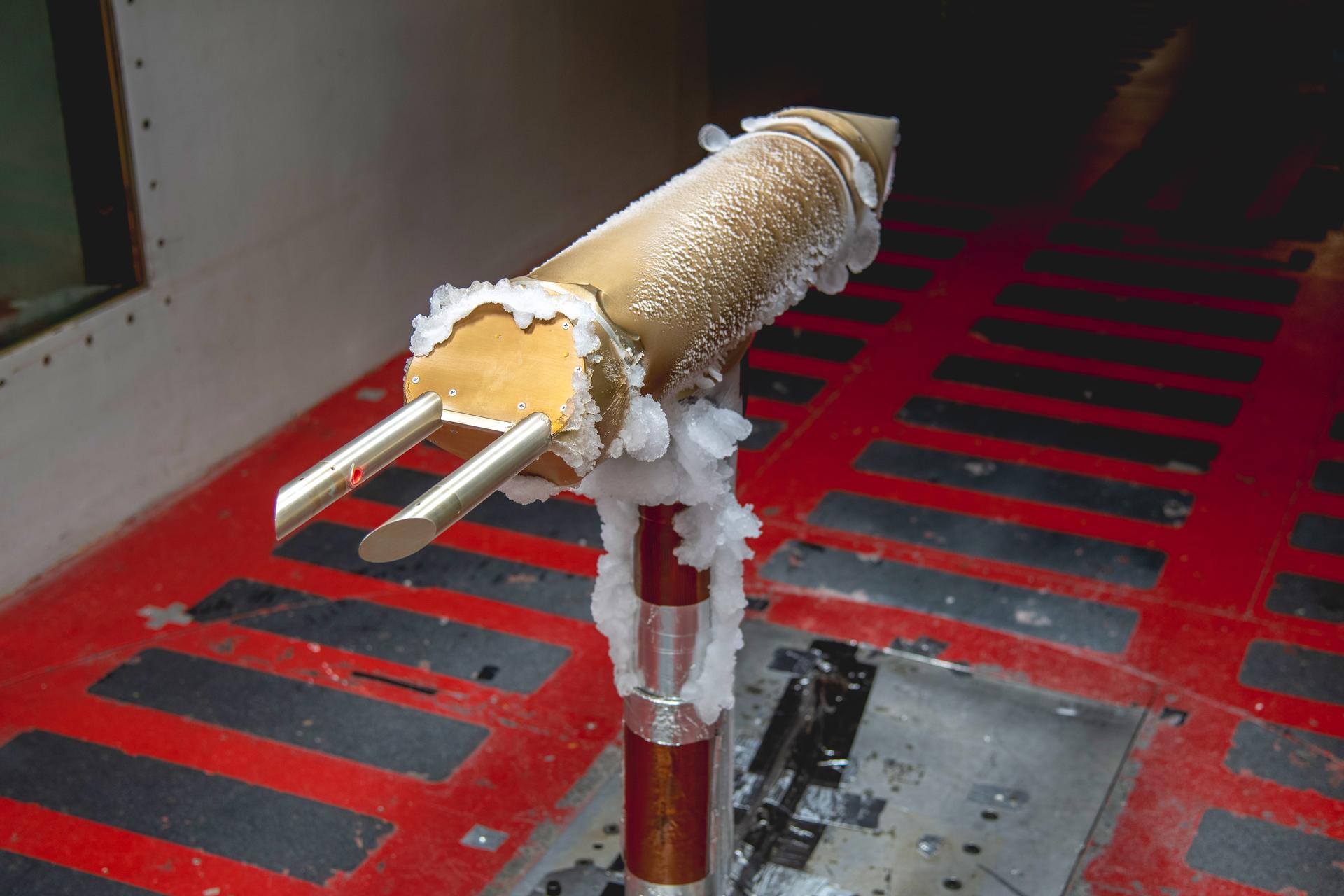
Researchers are enhancing the equipment used to generate and measure experimental clouds in the Icing Research Tunnel. This includes experimenting with new probes capable of measuring drop sizes larger than 45 microns in real-time.
These new probes' results will be compared with data from probes measuring smaller droplets to establish a complete droplet size spectrum. This comprehensive data will help engineers understand SLD behavior.
The tests are a key part of NASA's Subsonic Flight Demonstrator project. Detailed analysis of the collected data is ongoing, and findings will be shared with the aerospace community upon completion.
AI-samenvatting op basis van de bron.
NASA