NASA · Space
Perseverance Rover Finds Complex Water History in Mars' Jezero Crater
NASA's Perseverance rover discovered igneous rocks in Jezero Crater's "Margin Unit" show evidence of multiple water interactions, challenging initial expectations of sedimentary formations.
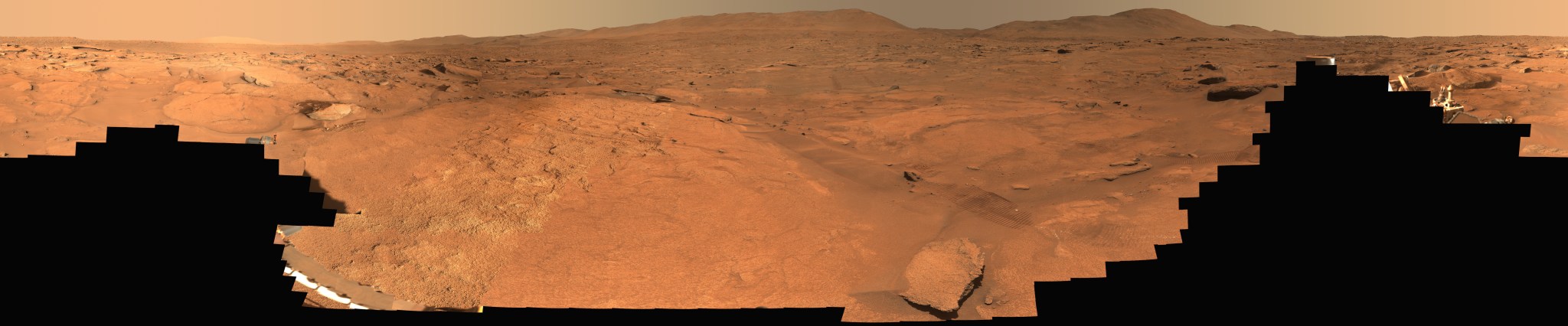
Scientists expected sedimentary rocks along the ancient lake's shoreline, good for preserving life. Instead, the rover found igneous rocks recording a complex water history with at least three separate alterations.
The SuperCam instrument analyzed over 185 targets. Initial hypotheses suggested carbonates formed from the Jezero lake, but the Margin Unit was a convergence point for water systems.
Higher elevation rocks were coarse-grained igneous, showing little water interaction. Lower elevation rocks near the lakebed were transformed with fractured olivine and silica.
Carbonate and silica minerals are key signs. On Earth, olivine-water reactions can release hydrogen and preserve microbial traces.
The sequence of water interactions was determined. First, groundwater reacted with olivine, creating carbonate fractures. Second, interaction may link to the lake, as silica was found below the water line.
A final event created mineral veins, including calcium sulfate and fluorite, suggesting a later, heated underground-water event.
These findings may reshape understanding of water history and climate on early Mars.
AI-samenvatting op basis van de bron.
NASA