NASA · Space
NASA Tests Next-Gen Heat Shields Using Spacecraft Deorbit
NASA is evaluating advanced heat shield technologies for lunar and Martian missions by repurposing a departing cargo spacecraft from the International Space Station.
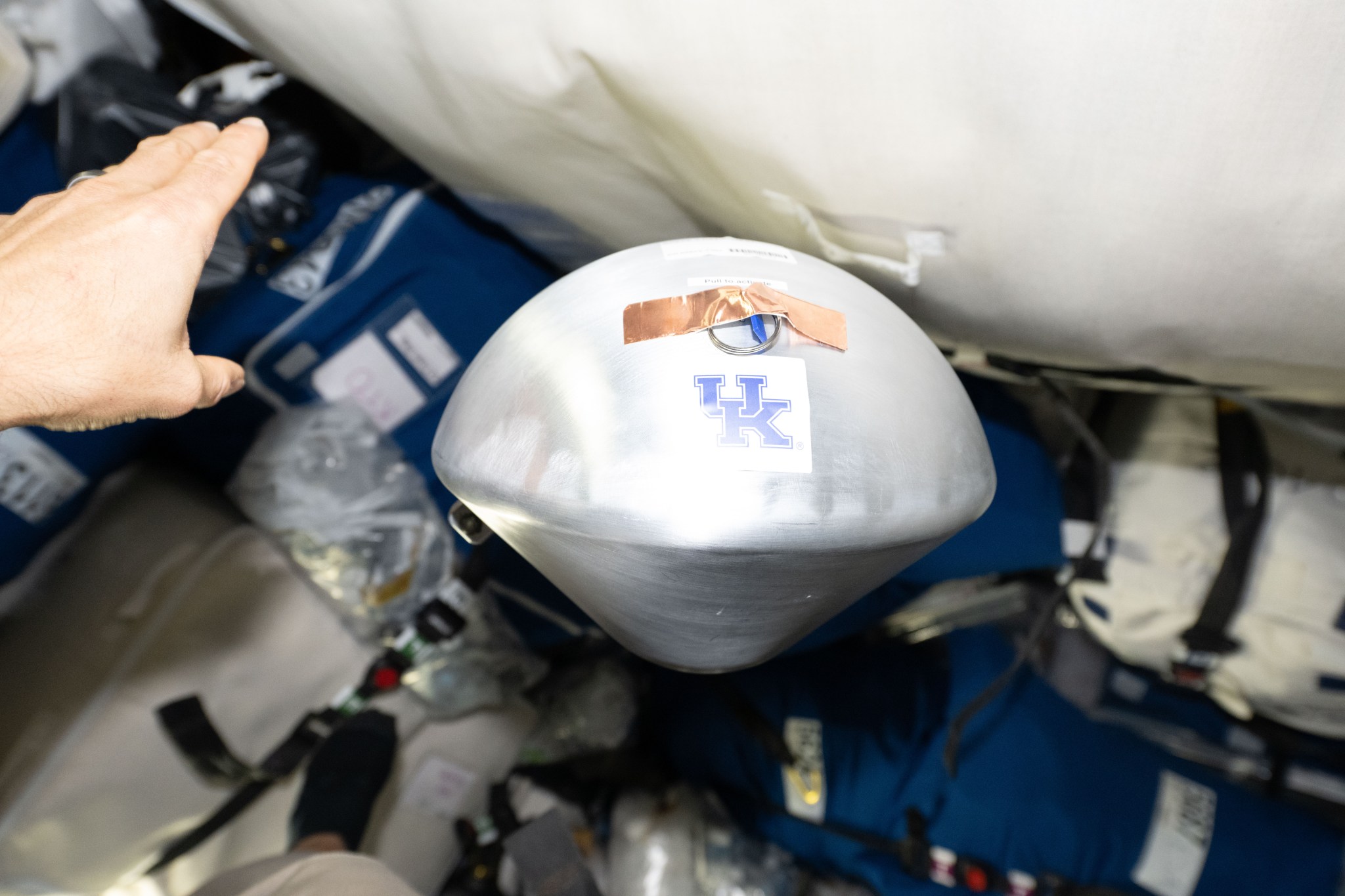
The Kentucky Reentry Probe Experiment (KREPE-3) mission involves 12 small capsules packed with waste and experimental heat shield materials. These capsules were ejected from the Northrop Grumman Cygnus XL spacecraft as it deorbited. Sensors within the capsules will collect data on temperature, pressure, and motion during atmospheric re-entry.
This experiment, a collaboration involving the University of Kentucky and NASA, aims to gather flight data on materials still under development. The live data transmitted via satellite will inform the design of larger heat shields for future crewed and uncrewed missions.
The capsules carry a variety of thermal protection systems, including traditional ceramic tiles and innovative materials. One notable test is a 3D-printed heat shield developed at NASA Johnson and Oak Ridge National Laboratory.
NASA Ames is contributing Materials Engineered for Re-entry using Innovative Needling Operations (MERINO), a flexible and cost-effective material made from stitched carbon and phenolic fibers, suitable for Mars missions.
Other tests include a dual-cone shaped experiment combining tungsten and carbon fibers, a capsule mimicking the aeroshell for the Dragonfly mission to Titan, and a deployable, umbrella-shaped heat shield.
The KREPE-3 mission also includes international contributions, such as a heat flux sensor from the University of Stuttgart, to measure heat transfer during re-entry. The overall goal is to advance heat shield capabilities through fast, affordable, and effective testing.
AI-samenvatting op basis van de bron.
NASA