NASA · Space
NASA Campaign Studies Wildfire-Generated Clouds
NASA's INSPYRE campaign aimed to study pyrocumulonimbus (pyroCb) clouds, powerful weather phenomena spawned by intense wildfires that can inject smoke into the stratosphere.
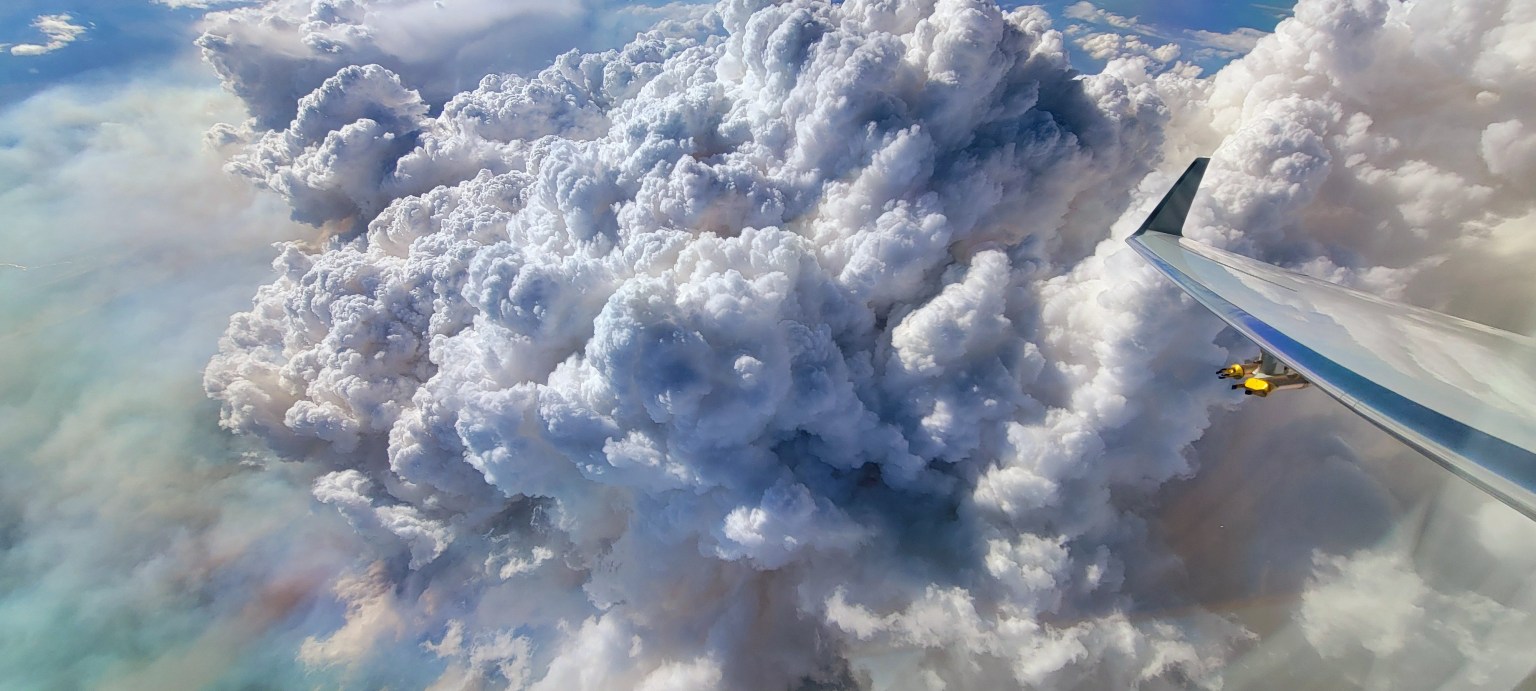
These clouds rise above fires, producing lightning and rain, with powerful winds that can intensify flames. The largest pyroCbs can send smoke up to 50,000 feet, impacting climate and weather globally due to smoke's long persistence in the stratosphere.
Scientists are still investigating whether fire energetics, intensity, or atmospheric conditions primarily drive pyroCb formation. Understanding these clouds is crucial because their smoke affects climate and weather far from the fire's origin and can generate dangerous winds.
The INSPYRE campaign utilized a Gulfstream jet and NASA's ER-2 aircraft, along with ground sensors, to collect data on smoke particles, gases, ice crystals, and radiation. Flights aimed to observe how these clouds transport smoke, transform its components, and what happens to it in the stratosphere.
Improved understanding of pyroCbs could lead to better fire forecasts, potentially warning firefighters of dangerous downdrafts and wind shifts. This research may also enhance Earth system models, which often do not explicitly account for pyroCb smoke injections.
A key challenge was locating these rapidly forming clouds. The team successfully gathered data on a pyroCb plume over the Wildhorse fire in Idaho, providing measurements shortly after its eruption.
Subsequent flights coordinated between the aircraft provided crucial observations of fire-driven airflow, helping document smoke plume evolution over time. The collected data will be combined with satellite and ground observations for analysis and model improvement.
AI-samenvatting op basis van de bron.
NASA