NASA · Space
Madagascar Anorthosite Massif Photographed from Space
An astronaut aboard the International Space Station captured an image of the Saririaky anorthosite massif in southern Madagascar, a geological feature that resembles lunar highlands due to its composition.
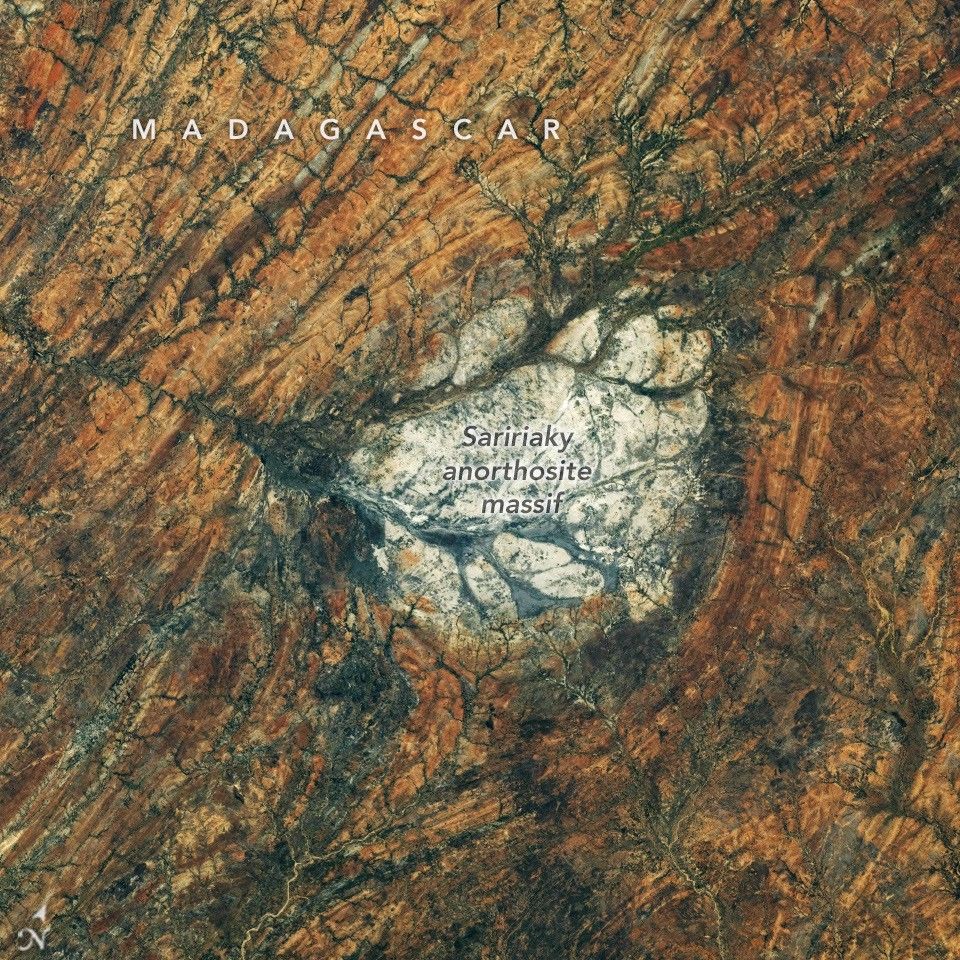
The Saririaky massif is a striking, round feature composed of anorthosite, an igneous rock common on the Moon's surface and known for its high reflectivity. This particular massif is about 100 square kilometers and scientists estimate it formed at least 600 million years ago.
The surrounding rocks indicate a dynamic geological past, with the anorthosite massif situated within a ductile shear zone. This zone, characterized by high pressures and temperatures, likely formed during the collision of continental plates that created the supercontinent Gondwana.
Some geologists propose that a separate anorthosite massif nearby was pulled apart from Saririaky during this continental collision, forming a large-scale boudinage structure.
Earth's anorthosites are valuable for lunar research. Because samples of ancient lunar anorthosites are limited, scientists study analogous terrestrial rocks, such as those in Madagascar and Montana, to understand the Moon's early history and its magma ocean.
AI-samenvatting op basis van de bron.
NASA