ArchDaily · Creativity & design
Tehran's Modernist Architecture Faces Erasure
Tehran's urban landscape is a complex tapestry of historical styles, shaped by political and geological instability. A significant period of modernist architecture, from 1930 to 1980, is now at risk.
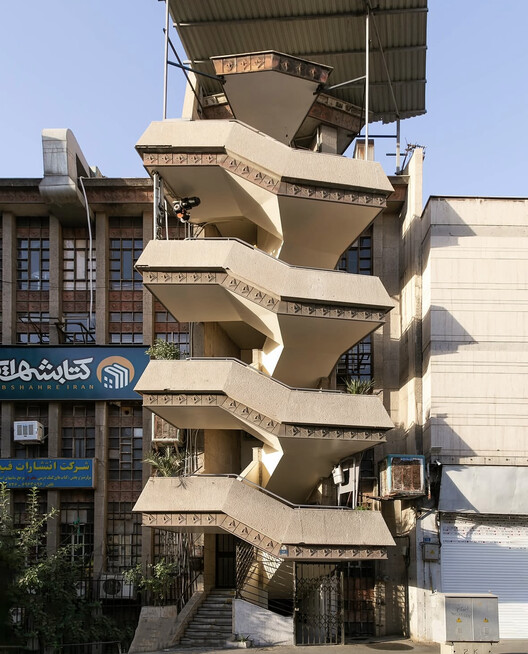
The city, situated at the foot of the Alborz mountains, experiences both protection and pollution due to its landscape. This strategic territory has seen centuries of disputes, with the capital built on geologically and politically unstable ground.
Tehran's avenues lie above active seismic faults, and the city above shows traces of constant reconstruction, demolition, and reinvention. It has continuously negotiated between memory and erasure over the past two centuries.
The city's architecture reflects various ideologies and styles, including traditional Persian masonry, European Neoclassicism, and Baroque.
However, the intense modernist architectural production between 1930 and 1980 is a particularly notable aspect of Tehran's urban history.
AI-samenvatting op basis van de bron.
ArchDaily