Hackaday · Creativity & design
DIY Copper-Oxide Photodetector
A recent video demonstrates how to create a photodetector using copper oxide (Cu2O), a semiconductor material, which can be made at home with basic materials.
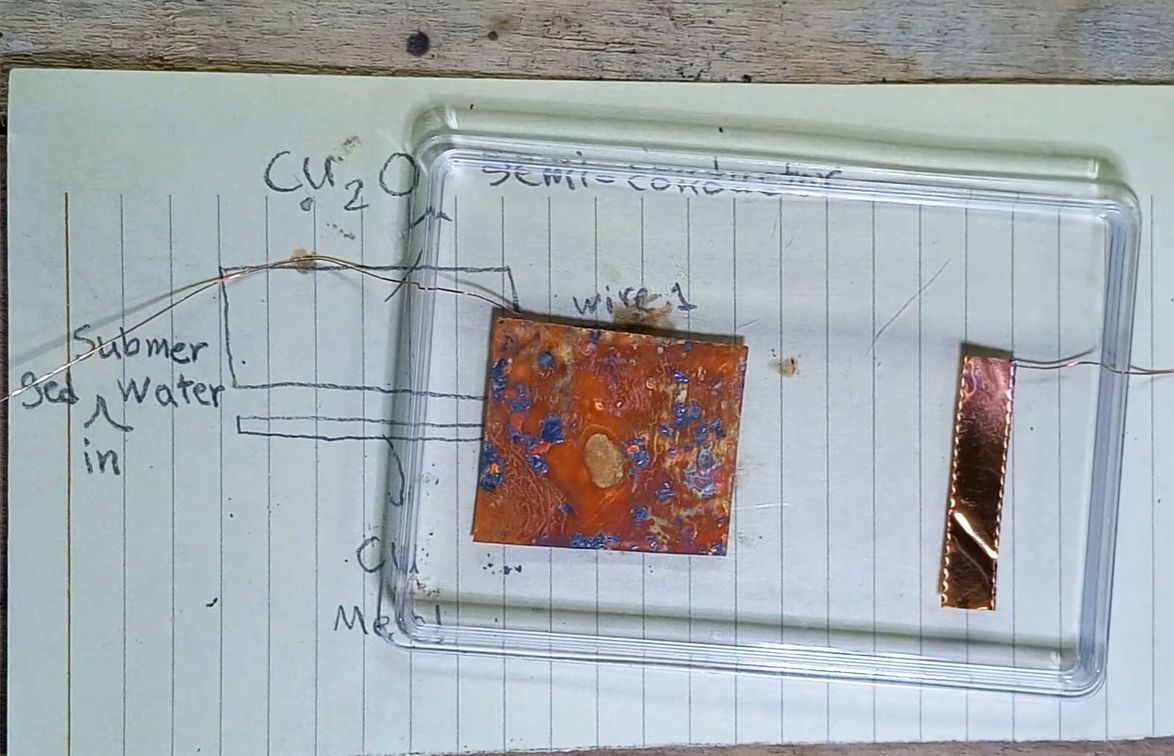
The process involves heating one copper element in a saltwater cell to form a Cu2O layer, which serves as the photosensitive component. Even a basic sensor made with a gas stove can generate enough current for simple light detection circuits.
Copper-oxide photodetectors are gaining interest due to their narrow bandgap of 1.2 eV. Research has shown that optimizing the grain structure can significantly improve performance, leading to higher sensitivity and faster response times.
Beyond light detection, these sensors can also function as gas detectors. While a DIY approach uses simple heating, advanced methods involve gas deposition for thin film production.
Although DIY sensors may not match lab-grade equipment, copper oxide remains an accessible material for experimentation.
AI-samenvatting op basis van de bron.
Hackaday