ArchDaily · Creativity & design
Latin America Architecture: Inhabitation, Heritage, and Cultural Exchange
Recent architectural developments in Latin America explore themes of inhabitation, cultural heritage, and connecting contemporary life with local knowledge. Projects and events across Argentina, Chile, Ecuador, and Peru highlight diverse approaches to context, memory, and community.
The Buenos Aires International Architecture Biennial, celebrating its 40th anniversary, focuses on the relationship between people, architecture, cities, and communities. Concurrently, initiatives like Chile's Oficios en Obra examine traditional construction practices, while Peru's Red Lima Milenaria seeks UNESCO recognition for pre-colonial archaeological sites within Lima.
Cultural infrastructure is evolving, with MALBA in Buenos Aires announcing an underground expansion to double exhibition space. In Madrid, Shakira's temporary Macondo Park, inspired by Gabriel García Márquez, creates a cultural landscape around concert venues using reusable components and trees.
The Kay Kay de Monkul Lookout Walkway in Chile's Monkul Wetland offers a low-impact wooden path for experiencing the landscape, integrating cultural and scientific information with the Mapuche Lafquenche culture.
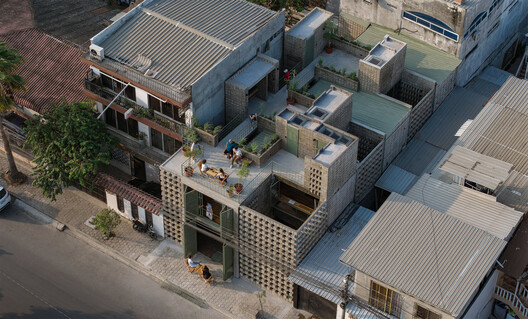
In Ecuador, La Colmena transforms a house into multi-family housing with courtyards for climate control and shared spaces, connecting residents to the neighborhood using local materials and artisanal techniques.
The KUSKA Residence near Cusco, Peru, reinterprets Andean building traditions with adobe walls and traditional roofs, incorporating sustainable systems like solar energy and rainwater harvesting for independent operation.
Upcoming events include the XXX Colombian Biennial of Architecture and Urbanism in Cartagena, expanding its scope to include Latin American projects, and Design Week Mexico 2026, featuring Chile and the MENA region, with discussions on architecture's capacity for change.
AI-samenvatting op basis van de bron.
ArchDaily