designboom · Creativity & design
Laterna Magika: Pioneering Projected Images in Live Performance
Laterna Magika, developed for Expo 58, integrated live performance with film projection, music, and dance, making the stage-image relationship its core subject.
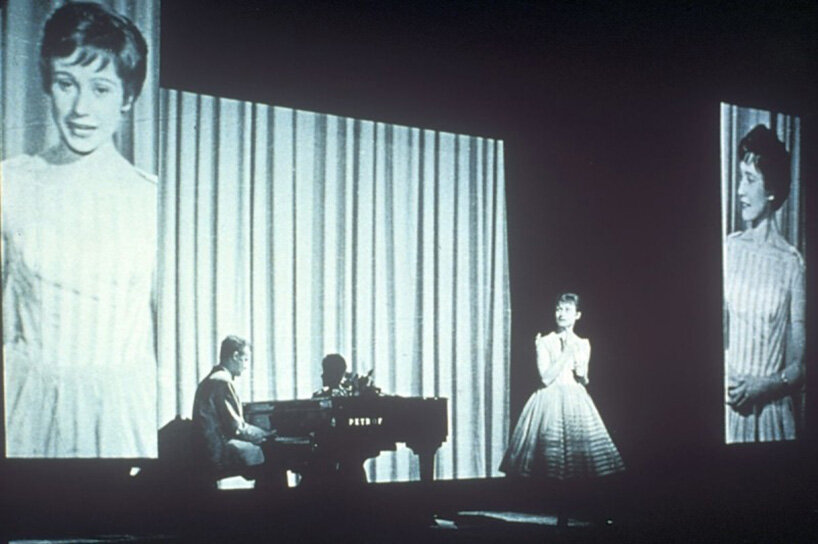
It became an independent company in 1959, exploring spectatorship and how projected images alter space. Filmed and live elements were precisely timed, with screens offering multiple layers for audiences.
Josef Svoboda treated light, projection, and technology as integral stage components. His collaboration with Radok at Expo 58 expanded scenography, creating interplay where projections heightened or contradicted live action.
Svoboda's work included technical systems like Polyekran, combining projection surfaces to manipulate spatial perception.
Laterna Magika directs audience attention between the physical and on-screen, changing the spectator's role to interpret their relationship.
After Expo 58, the company developed a broader repertoire. Svoboda influenced its direction and advocated for the New Stage theatre building.
Laterna Magika's experiments remain relevant as contemporary performance increasingly uses projection. The core setup of performers sharing the stage with images continues to influence design.
AI-samenvatting op basis van de bron.
designboom