ArchDaily · Creativity & design
Architecture in the Contemporary Botanical Garden
Botanical gardens have evolved from medicinal collections to expansive institutions that integrate landscape, design, community, and scientific inquiry. Their architecture has adapted to support cultivation, research, and public engagement.
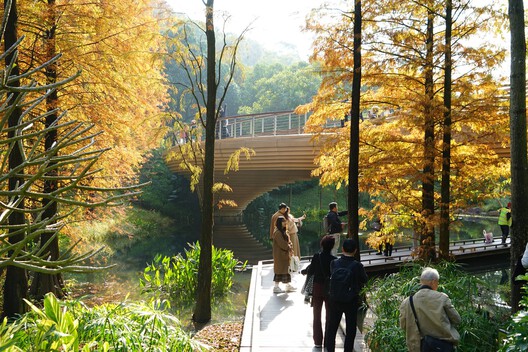
Emerging from early medicinal gardens, botanical gardens became public institutions for cultivating and displaying plant specimens from diverse regions. This evolution led to a distinct architectural repertoire, including greenhouses, conservatories, herbaria, laboratories, and visitor centers.
Architecture serves as a crucial tool for cultivation and a framework for organizing botanical study within these gardens.
In the 21st century, botanical gardens are shaped by concerns about biodiversity, conservation, climate, and ecological change.
Beyond research labs and seed collections, gardens now incorporate classrooms and exhibition spaces for education, recreation, and the arts.
The expanding programmatic and spatial roles allow gardens to play a broader civic function, connecting scientific research with public life and placemaking.
The architecture reflects this expansion, accommodating both researchers and horticulturists, as well as families, students, tourists, and local communities within productive landscapes.
AI-samenvatting op basis van de bron.
ArchDaily