Quanta Magazine · Wetenschap
In an Age of AI, a Physicist Seeks What Endures
Sarah Demers, chair of Yale's physics department, discusses the dual potential of AI in physics, acknowledging its utility in optimizing experiments while expressing reservations about its impact on intellectual property and the core principles of scientific inquiry.
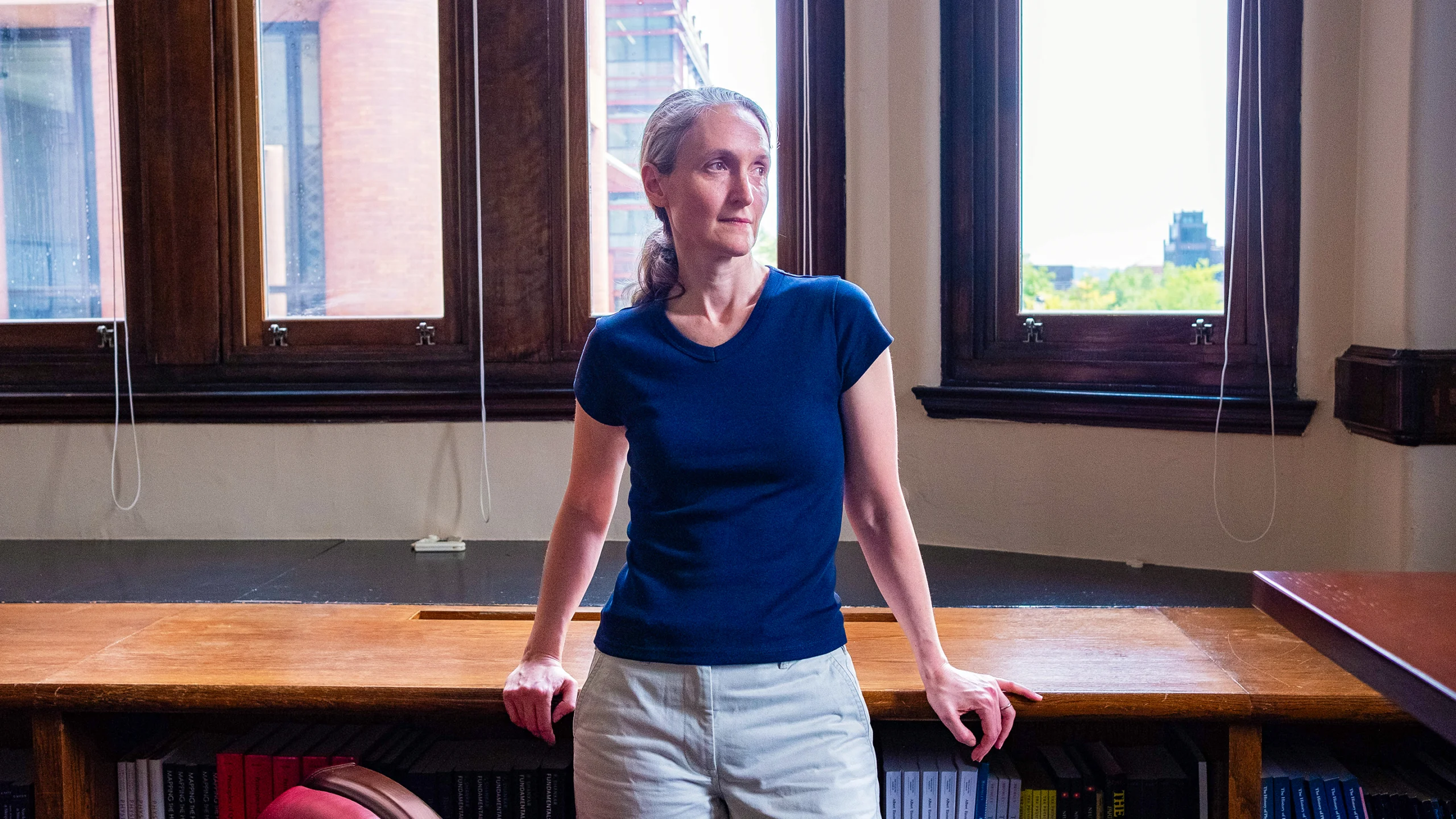
Demers is involved in a U.S. Department of Energy initiative to integrate AI into scientific processes, including a project using AI to aid physicists in searching for rare particle transformations at Fermi National Accelerator Laboratory. She sees AI as a valuable tool for optimizing experimental setups, likening its assistance to a "godsend" in fine-tuning complex machinery.
However, Demers harbors significant concerns about large language models (LLMs), particularly regarding their training on datasets that may include uncredited intellectual property and their potential to devalue original contributions. She is leading an effort through the American Physical Society (APS) to develop a policy statement on AI in physics, aiming to define what is enduring about the practice of physics itself, irrespective of technological advancements.
Demers notes that while AI is rapidly accelerating calculations in theoretical physics and altering required skill sets, its application in experimental physics is still evolving. She highlights its potential to streamline data analysis, reconstruct past experimental data, and answer previously unanswerable questions, though she stresses the importance of careful validation of AI-generated information.
A major point of discussion among physicists, including Demers, is the issue of intellectual property and attribution. While acknowledging the excitement surrounding AI's ability to access vast knowledge, Demers emphasizes that physicists must remain responsible for the content of their publications and validate any AI-derived information. The APS policy statement is anticipated in spring 2027.
Demers believes AI could enhance physics training by allowing new researchers to engage with data more quickly, freeing up time for conceptual understanding and problem-solving. She contrasts this with her own graduate school experience, where the struggle to find answers fostered deeper learning and human connection, a process she fears might be diminished by over-reliance on AI.
While some advanced researchers find LLMs useful as "thought partners" for quickly accessing references and refining ideas, Demers expresses caution for junior researchers, deeming it potentially dangerous. She personally avoids using LLMs for tasks like writing emails, viewing it as an evasion of the underlying challenges that require human thought and problem-solving. She also worries that LLMs answering questions based on her published work without engagement could hinder valuable scholarly conversations.
AI-samenvatting op basis van de bron.
Quanta Magazine