Carbon Brief · Klimaat
How this summer’s heat and drought impacted crops in Europe – in six charts
Farmers across Europe are facing the consequences of a summer marked by extreme heat, drought, and wildfires, events intensified by climate change. These conditions have led to reduced crop yields and production losses, impacting staple crops like cereals, potatoes, carrots, rice, and olives. Global food prices have risen, partly due to these agricultural challenges.
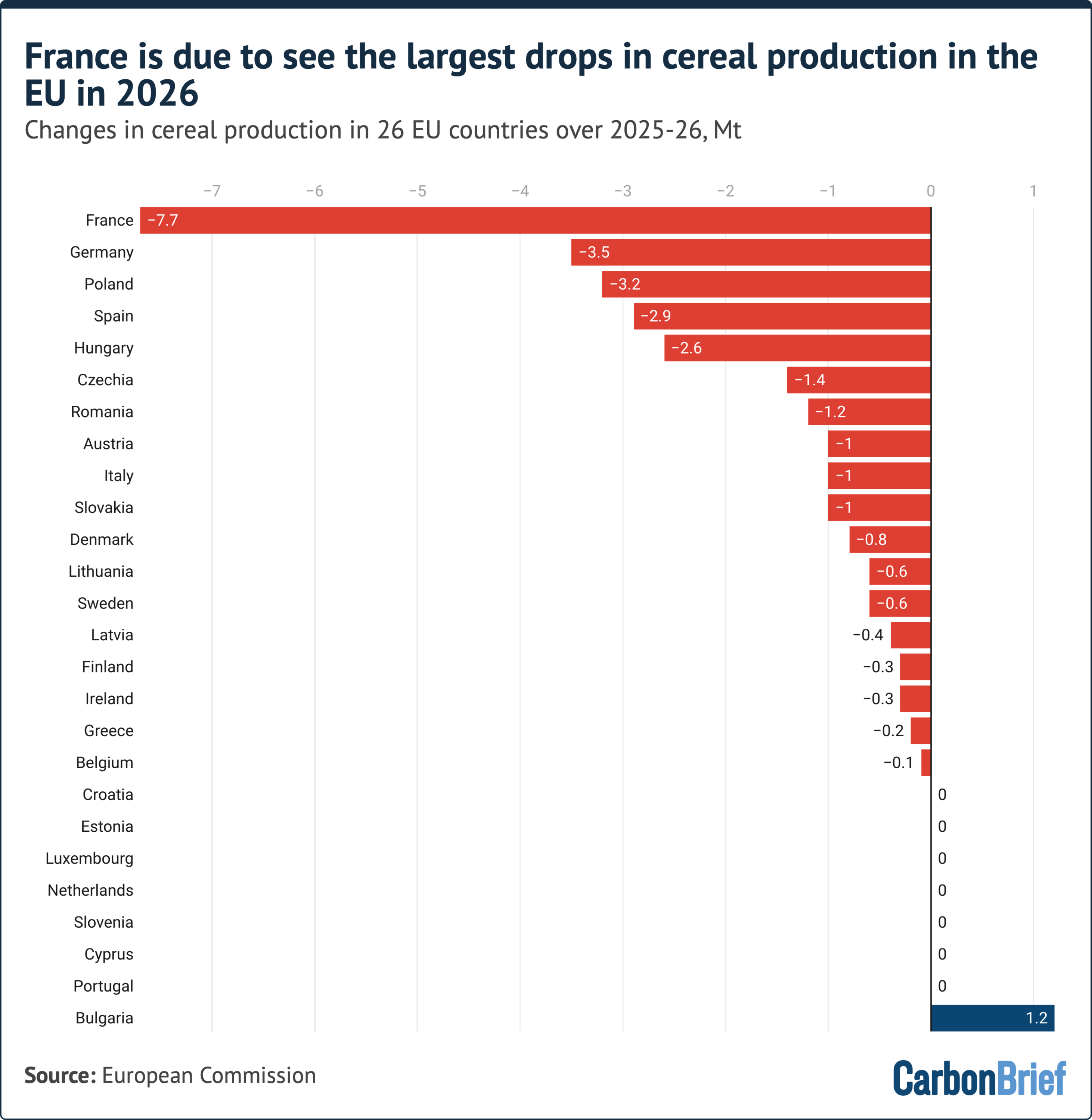
Most EU countries are anticipating a decrease in cereal production this year, with France and Germany expected to experience significant losses. This decline is attributed to prolonged dry periods and record heatwaves, which have also affected fodder crops like maize, crucial for livestock. Experts suggest that farming practices need to adapt to more extreme weather conditions.
Heat and water scarcity have substantially worsened crop expectations in western and central Europe, leading to significantly reduced yields and potential local crop failures in areas like France, southern Germany, Italy, and Hungary. While irrigated crops in Portugal performed well, rain-dependent crops showed signs of heat stress. Slovakia, Austria, and Hungary are projected to have the largest declines in cereal yields.
A record heatwave in June is estimated to have caused €2-2.3 billion in cumulative grain production losses across Europe. This heatwave, which was virtually impossible 50 years ago, significantly impacted major grain producers such as France, Germany, Hungary, and Spain. The extreme weather is also predicted to reduce the EU's GDP by approximately 1%, or €180 billion.
The UK is facing its worst harvest since 1984 if current trends continue, with projected drops in barley yields by 15%, oats by 14%, and wheat by 6%. This year is expected to be one of the five worst harvests on record, with four of those occurring in the past decade. Consumers may face higher prices and smaller produce in supermarkets.
France, the EU's largest agricultural producer, is set to see a drop of over 35% in maize production, potentially reaching its lowest level since 1980. The country has also experienced record-early grape harvests, resulting in smaller grapes that yield less wine. Extreme heat and drought have affected numerous crops across the nation.
Overall EU cereal production is projected to fall by 9% compared to 2025, with maize production particularly affected, expected to drop by 13% to its lowest level since 2007. Only one year in the past decade, 2024, recorded lower cereal production levels than currently projected for this year.
AI-samenvatting op basis van de bron.
Carbon Brief