ArchDaily · Creativity & design
Architectural Fabrics Enhance Building Envelopes
Architectural composite fabrics offer versatile solutions that complement traditional building materials, adding performance layers to the building envelope. These lightweight materials can be integrated into various applications, from climate control and comfort to enhancing spatial experiences and improving the environmental performance of existing structures.
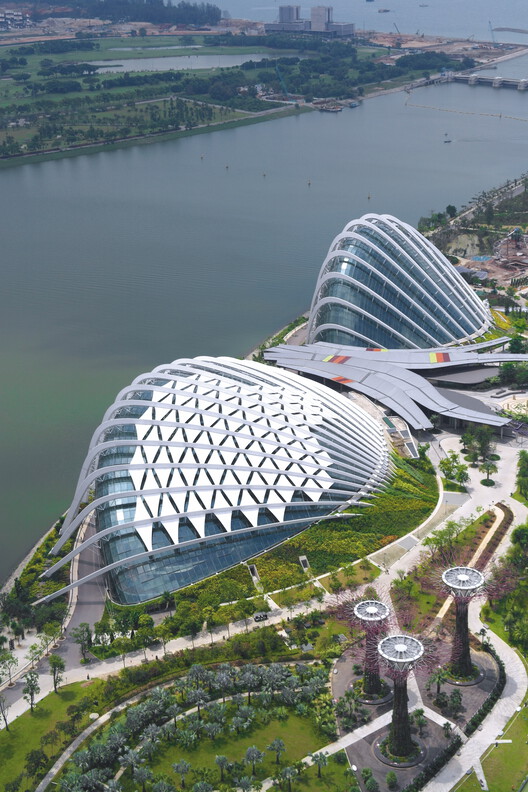
In Singapore's Gardens by the Bay, over 400 retractable textile shades were integrated into the conservatories' steel arches. This external shading system dynamically adjusts to solar conditions, significantly reducing solar heat gain before it reaches the glazing, thereby lowering cooling loads and maintaining necessary daylight for plant collections.
For Montréal's Biodome, a continuous white textile membrane was used internally to define spaces and guide visitors. This translucent surface softens natural light, creates visual continuity between different ecosystems, and improves acoustics by absorbing reverberation in the large atrium.
The Montpellier National School of Architecture's renovation integrated insulation, ventilation, heating, cooling, and solar control into a single facade system. Interior composite fabric screens modulate daylight, contributing to a 60% reduction in energy consumption and making environmental systems visible to students.
Across these examples, architectural fabrics function as responsive environmental layers, enabling buildings to adapt to climate and enriching spatial experiences. Lightweight textile technologies offer new possibilities for designing envelopes that filter, respond, and transform.
AI-samenvatting op basis van de bron.
ArchDaily