Dezeen · Creativity & design
Harvard Researchers Develop Waste Wool Cladding for Building Retrofits
Researchers at Harvard University's Grinham Research Group have created an insulating cladding tile from waste wool, aiming to repurpose a discarded material for building reuse and energy efficiency.
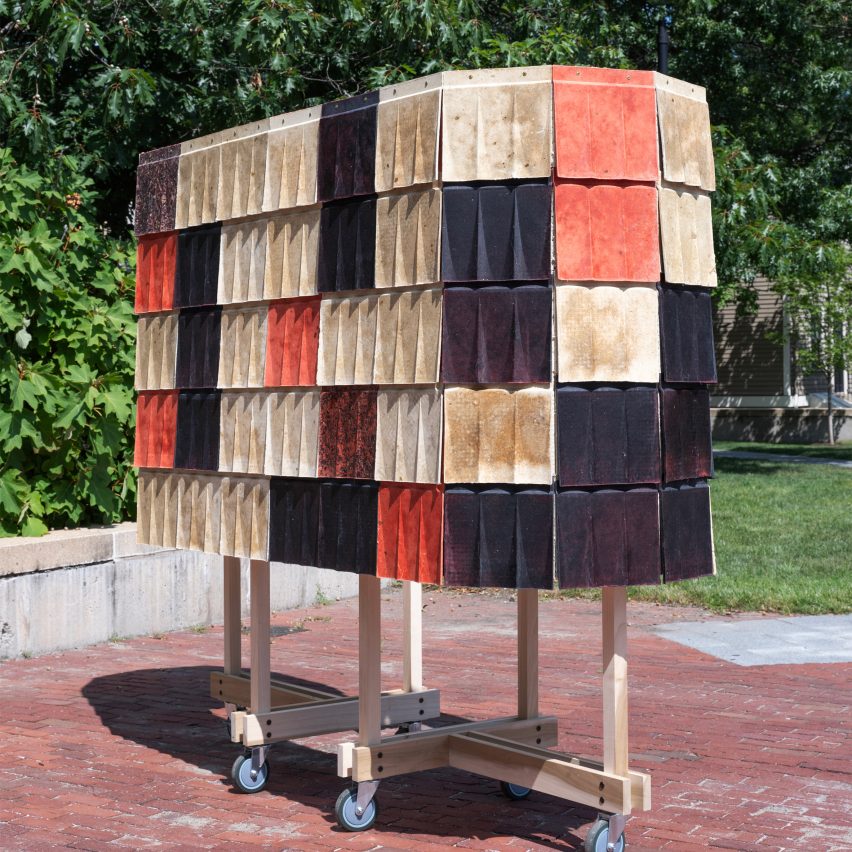
The developed tiles were showcased at the Oslo Architecture Triennale, demonstrating their application on a timber frame. The material leverages wool's natural insulative, fire-resistant, and antibacterial properties, addressing the issue of significant wool waste from agricultural and textile industries.
The multi-layer tile design allows for external application, simplifying building insulation upgrades without invasive wall work. It features a low-density insulating back panel and a denser, more durable outer layer for weather resistance.
Jonathan Grinham, founder of the research group, highlighted the potential for architecture to create "industrial ecologies" that retain material value and support existing industries while providing scalable retrofit solutions. This approach aims to sequester biogenic carbon within the built environment.
The manufacturing process involves treating wool with an alkaline solution and mechanical separation, followed by the addition of citric acid. When heated, this binds wool fibers into a rigid composite, eliminating the need for petrochemical resins.
This innovation addresses the substantial quantities of wool that lack a viable market due to factors like declining domestic textile manufacturing and competition from synthetics. The material retains its valuable properties despite losing economic value.
For the Triennale installation, pre-consumer waste wool was sourced, resulting in varied tile colors. The material can be pressed into different shapes, offering design flexibility beyond the fluted surface shown.
AI-samenvatting op basis van de bron.
Dezeen