Carbon Brief · Climate & nature
Extreme Heat Seasons Shifting Globally
Extreme heat events are increasingly occurring outside traditional summer months, extending into spring and autumn in over half the world. This shift poses risks as people and infrastructure may be less prepared for heatwaves during these "shoulder seasons."
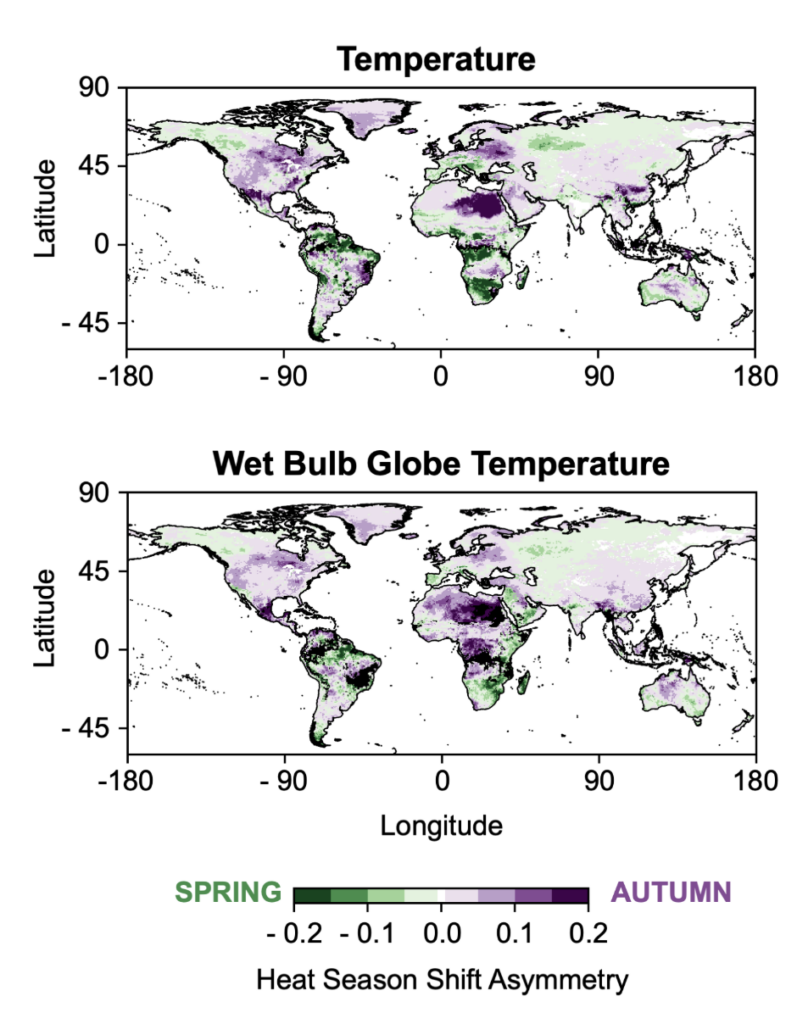
A study in AGU Advances defines "local heat seasons" by the three months with most extreme heat in the 1980s. It analyzes changes over 45 years using 1980-2024 climate data, considering dry and humid heat.
Results show extreme heat was largely confined to specific seasons in the 1980s. By 2015-2024, extreme heat events spread into the calendar year in over half of global land areas, unevenly extending into spring or autumn.
Western Europe, southern Africa, and northwestern India show more heat events before historical seasons. The US, eastern China, northern Africa, and eastern Europe see more heat events after traditional seasons.
General warming explains some shifts within heat seasons, but not the uneven shoulder season changes. Other factors like precipitation, soil moisture, land use, and natural climate fluctuations may contribute.
The expansion into shoulder seasons requires heat early warning systems and cooling centers to operate year-round. Further research is needed on overlaps with other hazards like wildfires and hurricanes.
AI-samenvatting op basis van de bron.
Carbon Brief