EPFL · Science
Water's Journey: From Tap to Sewer and Back
Water purification and recycling are vital for public health and resource conservation, as water molecules continuously cycle through various states and environments. Switzerland's high-quality water supply requires minimal treatment, but challenges remain in detecting and eliminating all pathogens.
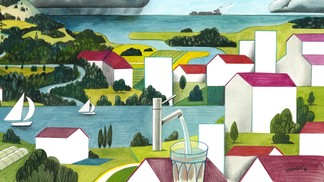
Switzerland's drinking water, largely from groundwater, needs little treatment. Lake water requires purification to remove pathogens. Current tests focus on bacteria, not viruses, which can risk vulnerable groups, necessitating boiling water for them.
Research seeks virus removal methods without chemicals. Some viruses can use human cells for replication and have resistant variants, posing a treatment challenge.
Historically, wastewater management evolved from simple drainage to complex treatment. Early systems discharged untreated wastewater, causing contamination. Switzerland's first plant was in 1917; by 1990, 90% of households were connected.
Treated wastewater is increasingly reused for irrigation and industry. Some countries aim to recycle it into potable water, a complex process removing microbes, chemicals, and nanoplastics.
Wastewater analysis tracks drug use and pathogens. Researchers also explore extracting valuable materials like gold from wastewater for purification and recycling.
Urban development reduces soil's water absorption, increasing runoff and flooding. Solutions include more unpaved surfaces, rainwater harvesting, and porous roads.
EPFL tests 'sponge-city' concepts to increase rainwater recovery, reducing runoff. These strategies are modeled globally to mitigate flood risks.
AI-samenvatting op basis van de bron.
EPFL