ArchDaily · Creativity & design
Reviving India's Historic Water Systems
Researchers are exploring if traditional Indian water structures can be repurposed to supplement modern urban water needs amidst growing scarcity.
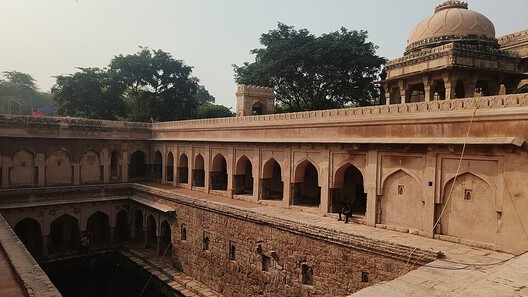
Traditional water management was integrated into urban life. In Ahmedabad, Tankas (underground chambers) collected rainwater from roofs and courtyards, often within homes. A 2026 study estimated thousands may still exist.
These systems relied on the house as a catchment. Their construction used stone, brick, and lime. While stepwells are iconic, smaller Tankas were practical for dense neighborhoods.
Centralized municipal water systems, like Ahmedabad's Dudheshwar Water Works (1892), reduced the need for household rainwater harvesting, making Tankas functionally obsolete.
Ahmedabad's geology and dense urban layout favored Tankas for rainwater collection. The courtyard became a catchment, and the house part of the water system.
A 2026 study found residents willing to reintegrate Tanka water, but governance, ownership, and water quality are barriers. Hyderabad's Bansilalpet Stepwell restoration showed water recovery but not city-scale impact.
Restoring functionality requires maintenance and operational knowledge. Challenges include private vs. community systems, water testing, and municipal regulation.
A model combining municipal and community efforts is proposed, emphasizing routines of cleaning and maintenance. Adapting these structures requires coordination between architecture, policy, and communities.
AI-samenvatting op basis van de bron.
ArchDaily