ArchDaily · Creativity & design
The Evolving Symbolism of the Circle in Architecture
Throughout history, the circle in architecture has symbolized cosmic geometry, celestial bodies, and divine honor. In the 20th century, it gained new meanings associated with technology, aviation, and space exploration, influencing architectural design.
The Roman Pantheon, with its dome and oculus, symbolized the heavens and glorified the Roman Empire. Medieval Gothic cathedrals featured rose windows, often integrated into the western façade.
The circle's association with navigation and machinery began in the 16th century with ship portholes, circular openings designed for cannons. These openings later became common in various structures for light and ventilation.
Portholes offer structural integrity, making them ideal for environments with extreme pressure, such as submarines and space stations. They gained popularity during the Art Deco period, with architects like Le Corbusier drawing inspiration from ships.
Futurist architects in the early 20th century envisioned buildings as dynamic, technological environments, embracing materials like concrete and iron. This era saw circular windows associated with machines and futuristic spaces.
Buckminster Fuller's Dymaxion House concept aimed for a self-sufficient, sustainable 'living machine.' The Space Age aesthetic further linked circular forms to spacecraft and new habitation concepts.
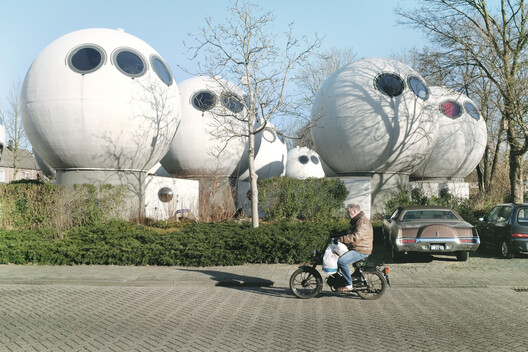
Experimental architecture, like the spherical Bolwoningen houses, explored new typologies and organic living. Contemporary architecture continues to use circular elements, now evoking resilience, ecological systems, and alternative living.
AI-samenvatting op basis van de bron.
ArchDaily