ArchDaily · Creativity & design
Designing Narratives of Space Through Worldbuilding
Innovative design often emerges from interdisciplinary intersections. Architects have historically drawn inspiration from fields like film and literature to understand how space shapes narratives and experiences. Worldbuilding extends this by requiring architects to define the social rules, technologies, and relationships that make a place believable, shifting the focus from 'what should it look like?' to 'in what world would it make sense?'.
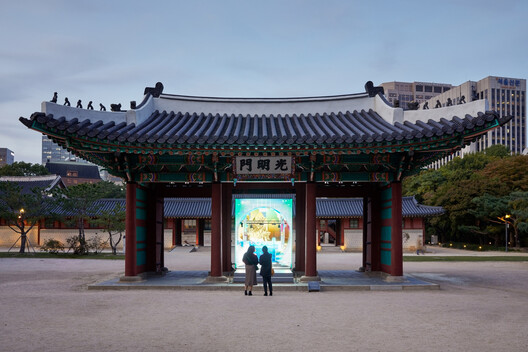
Worldbuilding is familiar in fiction, where films and games require internal logic. Spatial design in film can elevate a city to a character or a room to a revelation.
Science fiction, notably 'Blade Runner,' uses spatial design to create coherent, unfamiliar futures, reimagining cities with their own density and infrastructure.
Video games integrate space by making worlds functional and aesthetic, where space acts as both setting and interface. Projects like 'Architecture (AFTER GAMES)' have translated game environments into physical installations.
Lawrence Lek's 'NOX' in Berlin created a fictional AI-driven urban environment, where architecture serves as the story's operating system.
Avant-garde architectural education, such as UCLA's Speculative Worlds Studio, now emphasizes worldbuilding, encouraging students to develop imagined worlds through diverse outputs.
This approach treats worldbuilding as a design problem, requiring students to construct a world's logic for others to engage with. It's also applicable to experiential spaces like museums and theme parks.
The Guggenheim's 'Åzone Futures Market' used a web-based platform to create a speculative future economy. Worldbuilding offers distance from the present, exaggerating existing conditions or making invisible systems visible.
AI-samenvatting op basis van de bron.
ArchDaily